
Judo is a notable example of how sports encompass a wide range of competences. When Jigorō Kanō, an educator from Japan, founded judo in the late 19th century, he did not merely refine martial arts; he developed an interdisciplinary activity based on two principles: Seiryoku Zenyo (maximum efficient use of energy) and Jita Kyoei (mutual prosperity for self and others). Practicing judo requires interconnected coordination of the body, mind, and spirit at the individual and collective levels, encouraging more than physical strength, but also developing personal, social and learning competences.
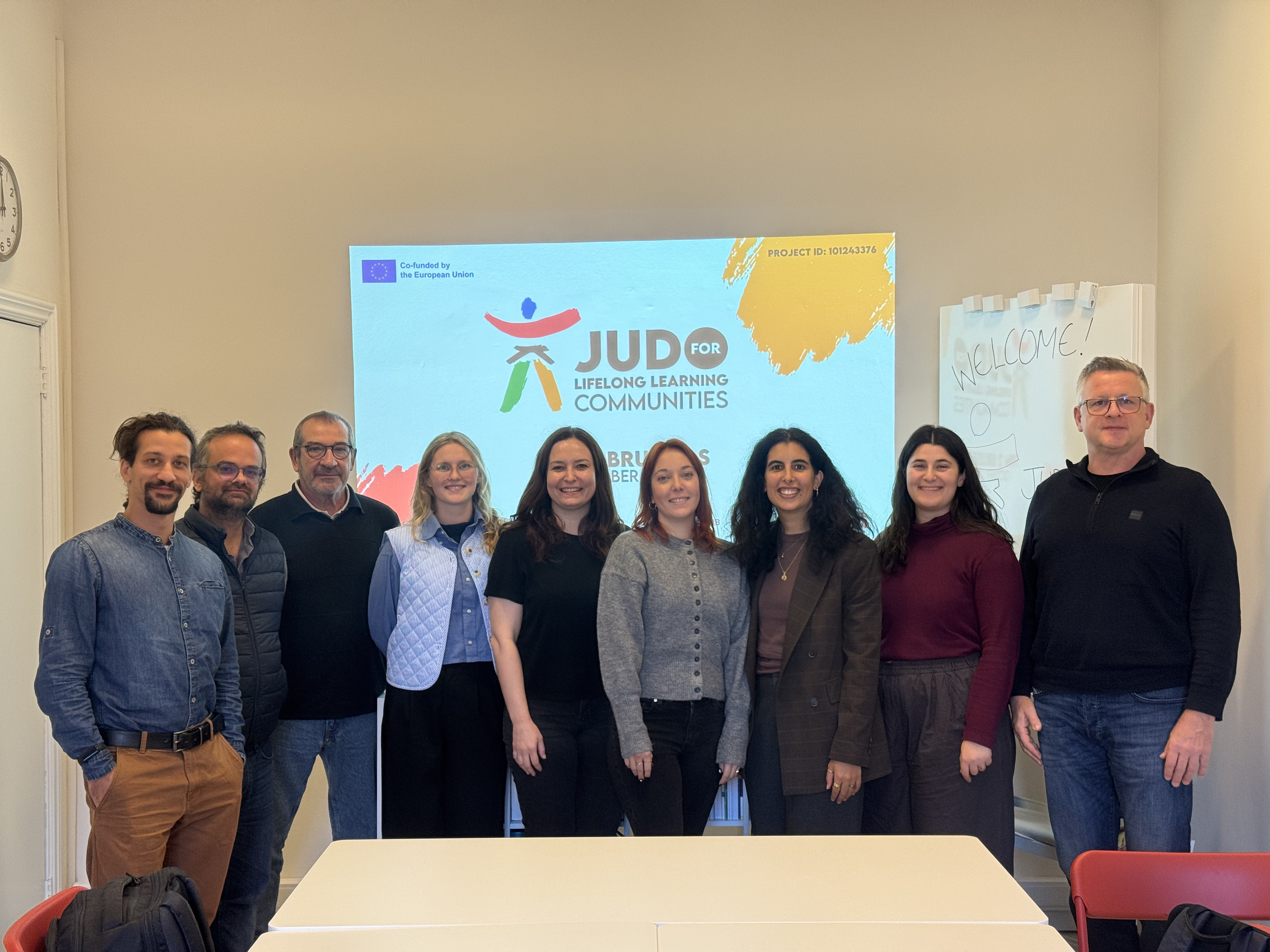
On 29th and 30th October 2026, Judo for Lifelong Learning Communities (JUDO4LLC) project partners gathered in Brussels for their second transnational meeting, hosted by the European Association for the Education of Adults (EAEA). This project addresses the growing need for new pedagogic means that bring together sports with lifelong learning competencies, aligned with broader European strategies for competence building and social inclusion. Over two days of workshops, demonstrations, and discussions, they finalized the JUDO4LLC Framework which links Judo’s values with personal, social and learning-to-learn European competence frameworks.
From competence framework to learning activities
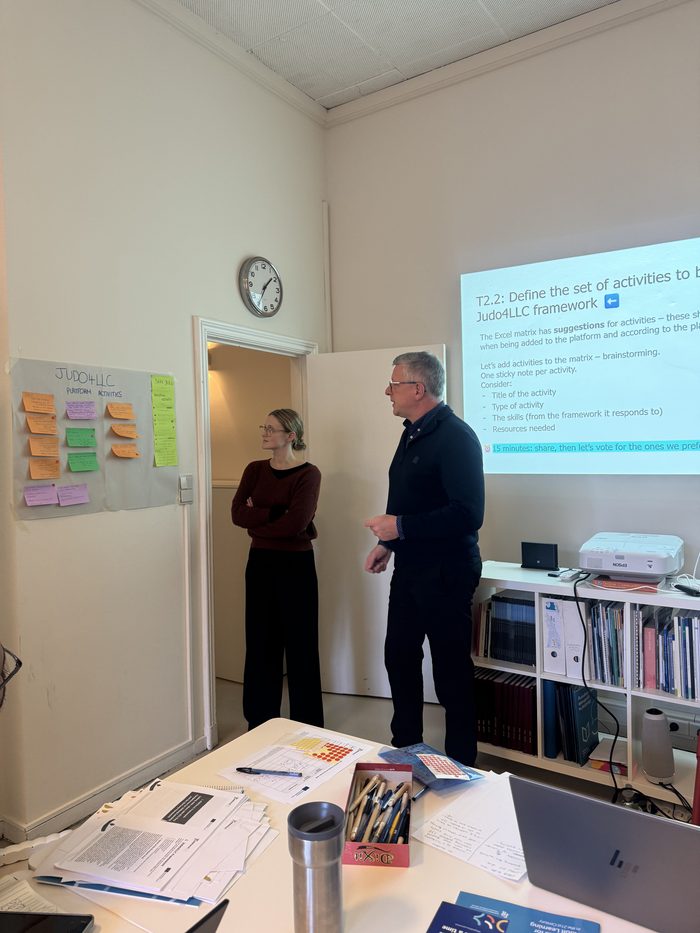
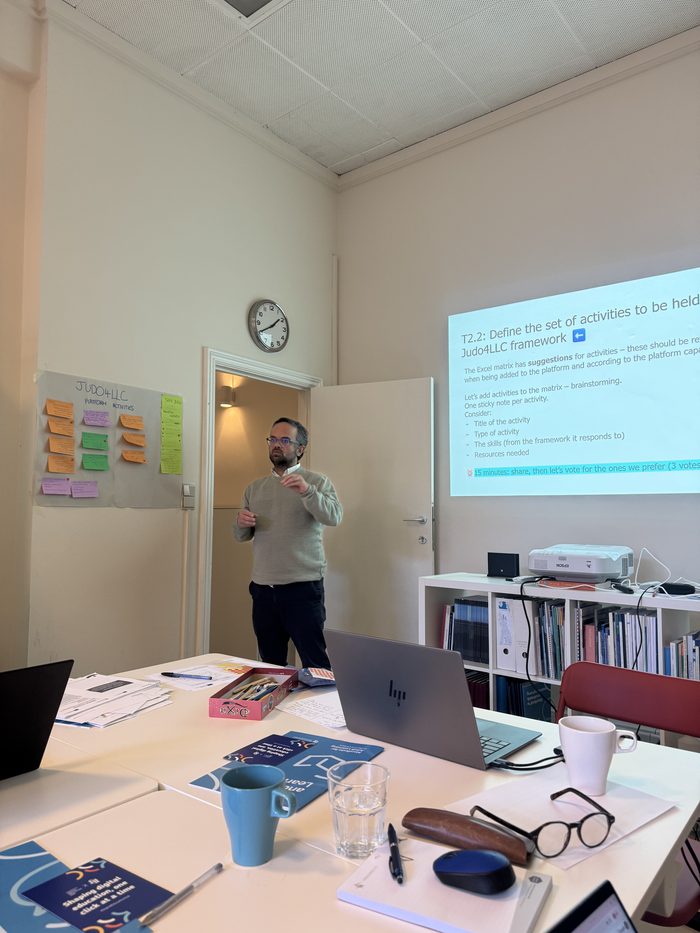
EAEA’s Maria Ribeiro, Policy and Project Coordinator, and Charlotte Ede, Learning and Project Coordinator, hosted a collaborative workshop to finalise the JUDO4LLC framework and brainstorm activities for the online learning platform. The workshop produced further activity ideas for the framework, with partners sharing proposals and identifying those to develop. The emphasis was on making learning meaningful and relevant to the people who will take part, in line with EAEA’s learner-first approach to adult learning and education. Practising safely with a partner, for example, offers opportunities to develop patience, empathy and responsibility. Reflecting on a personal judo journey can help participants recognise how those qualities influence their relationships and decisions in everyday life.

Developing the online learning platform
A live demonstration led by Qantara Sports brought the developing online platform into focus. Partners explored a test environment through individual, club and community profiles, examining how users could interact, share experiences, complete activities and receive badges recognising their achievements. Trying different profiles helped the group consider the experience from several perspectives and discuss how the platform could support connections between clubs and their members.
Accessibility, engagement and a sense of belonging were central to these discussions. Partners considered the support that clubs and individuals may need, including those less familiar with digital tools. Feedback during the pilot phase will help refine the platform and its accompanying activities.
The meeting emphasizes that JUDO4LLC is to go beyond the tatami and to develop lifelong learners. Jita Kyoei believed the principles of judo extended beyond the sport, serving as a foundation for personal development and societal well-being. The Judo4LLC project aims to honour these values by integrating sports, especially Judo, into lifelong learning programs.
The JUDO4LLC Competence Framework will be published in December 2026.
Read more from EAEA on sports and ALE:
- Learning through sports and physical activity
- Competence and community development through sport
- Judo and competence frameworks from an ALE perspective
EU-funding acknowledgement
JUDO4LLL is an Erasmus+ Sport project. The project is coordinated by Športno društvo GIB Ljubljana Šiška from Slovenia, working alongside the International Judo Federation (Hungary), EAEA (Belgium), Qantara Sports (Portugal), Associazione Italiana Sport Educazione (Italy) and Judo Club Rijeka (Croatia).

Funded by the European Union. Views and opinions expressed are however those of the author(s) only and do not necessarily reflect those of the European Union or the European Education and Culture Executive Agency (EACEA). Neither the European Union nor EACEA can be held responsible for them.
__________________
Text adapted from JUDO4LLC project partners for use on the EAEA website.
Text: Charlotte Ede, Maria Gonçalves Ribeiro