
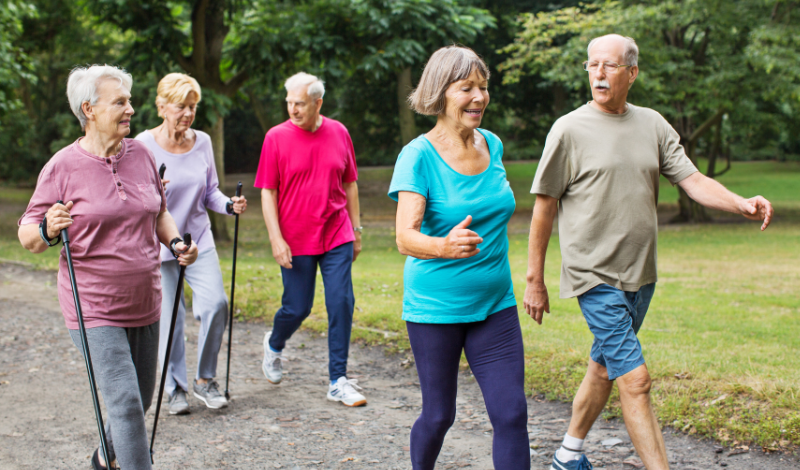
Sport is known for its benefits for physical and mental wellbeing, but its role in supporting learning and as a learning environment in itself, particularly outside formal education, is often unrecognised, overlooked and underrepresented. Far from only occurring in classrooms, learning happens thanks to active participation, hands-on experience, and social interactions. When doing sports, people engage in learning processes that are inherently experiential and learner-centred. But although everyone engages with sport when in school, almost half of the EU population was reported to never engage in sports or physical activities afterwards.
There is a clear need for more sport opportunities, including those outside the formal education and focused on adults and that bring different generations together. Initiatives across countries and at EU level show this commitment but much more needs to be done to frame sports and physical activity as a cross-cutting area that supports health, well-being, community building and learning.
The European dimension of sports
Sport can be a very valuable part of people’s lives, affecting health and mood, encouraging learning and connecting with others, and even inspiring innovation and work in the area. According to the European Commission, sport is a public good, socially, economically, politically, and culturally beneficial. At EU level, the European Sport Model, the Erasmus+ financing for Sport and the EU Work Plan for Sport (2024-2027) frame and support the values and policies through which sport is organised in Europe.
The European Sport Model prioritises social, educational, and cultural values and emphasises inclusion, diversity, and solidarity, allowing elite sport to support community and grassroots sports. Similarly, the European Week of Sport aims to promote the benefits of sport and encourage individuals, public authorities, the sport movement, the private sector and civil society organisations to collaborate in the field of sport. In 2025, the European Week of Sport brought together over 15 million people in more than 80,000 activities across nearly 40 countries. Sport is also promoted by the European Commission through Erasmus+, with €500 million dedicated to sport projects and initiatives in the Erasmus+ budget of 2021-2027. At this moment, a new strategic vision for sport in Europe is also currently being developed, counting with the contributions by organisations and individuals through the public consultation in 2025.
Additionally, European countries also coordinate their national policies in line with the EU Work Plan for Sport (2024-2027). This plan states that the priorities regarding sport are: integrity and values in sport, socio-economic and sustainable dimensions of sport, and participation in sport and health-enhancing physical activity.
Sports and ALE
EAEA asserts that one of ALE’s key functions is to bring people together around a common interest and help develop a sense of community which directly supports well-being and resilience (Manifesto, 2024). Sport is and can be one of these interests, with learning happening within a wide range of exercise and sports programmes for different interests and age groups. Volunteering, especially vital in sport-related activities, also develops the skills of the volunteers who are actively contributing to something that others can enjoy and learn by doing and from peers.
Sport promotes learning competences such as communication in mother tongue or a new language, learning to learn, social and civic competences, cultural awareness, and even digital competences (as defined in the Erasmus+ project “Adult Education Through Sport”). Importantly, the skills developed through sport can contribute to personal development, fulfillment and have a very positive impact on their social life and their professional development. Actively promoting worker well-being in and out of the workplace through ALE can help to prevent long-term inactivity due to burnout and other stress-related health problems (EAEA Manifesto).
On the other hand, sport provides many cognitive and emotional benefits that improve learning ability and the overall educational experience of adult learners: enhanced memory, and attention thanks to increased blood flow to the brain; reduced tension through the release of endorphins; increased discipline and concentration. Sport and physical activity can also promote social interaction, important skills for learning and provide opportunities to discuss and reflect on diverse points of view. Hence, not only is sport a truly valuable learning environment in itself, but it also supports learning in educational environments in key ways.
Sport is, therefore, not exclusive to younger people. Older adults benefit immensely from physical activity programs. EAEA’s Ageing Well project which produced a training programme directly targeting adults 65+ included sport and physical activity as one of its main categories. Sport has long-term health benefits that lead to better educational results and a higher quality of life. In addition, in particular intergenerational approaches to sport can enhance the learning and social cohesion impacts of physical activity. EuropeActive, a NGO representing the European physical activity sector, also shows the importance of spaces which promote intergenerational gatherings for physical activity, where both children, teenagers and young and older adults become more active together.
The Lifelong Learning Platform recently published a statement highlights the importance of a whole-community approach to physical activity and wellbeing, promoting accessible and age-friendly sport facilities as public goods and recommending that sport is effectively recognised as a strategic learning environment within lifelong learning systems. LLLP explains “learning in and through sport should be consciously supported by trained coaches, educators and facilitators”, as these professionals can support individuals, especially those furthest away from learning and who face access barriers, to continue learning in an informal or non-formal environment.
Judo for lifelong learning communities
EAEA is currently working on a project on Judo for lifelong learning which addresses the growing need for new pedagogic means that bring together sports with lifelong learning competence development. We are currently working on linking the Judo principles and values with the main European and international competence frameworks aiming towards creating a Judo learning community which will allow peer-learning and connect Judo participants across Europe through profiles, forums, collaboration spaces, and resources to share expertise and needs.
Find more information about the project in our project page!
EU-funding acknowledgement
JUDO4LLL is an Erasmus+ Sport project.

Funded by the European Union. Views and opinions expressed are however those of the author(s) only and do not necessarily reflect those of the European Union or the European Education and Culture Executive Agency (EACEA). Neither the European Union nor EACEA can be held responsible for them.
Text: Beatriz Martin Pique, Maria Gonçalves RibeiroPhotos: alvarez from Getty Images Signature