The new EU Gender Equality Strategy 2026–2030 explicitly says that it contributes to fulfilling the EU’s obligations under the 1979 UN Convention on the Elimination of All Forms of Discrimination against Women (CEDAW).
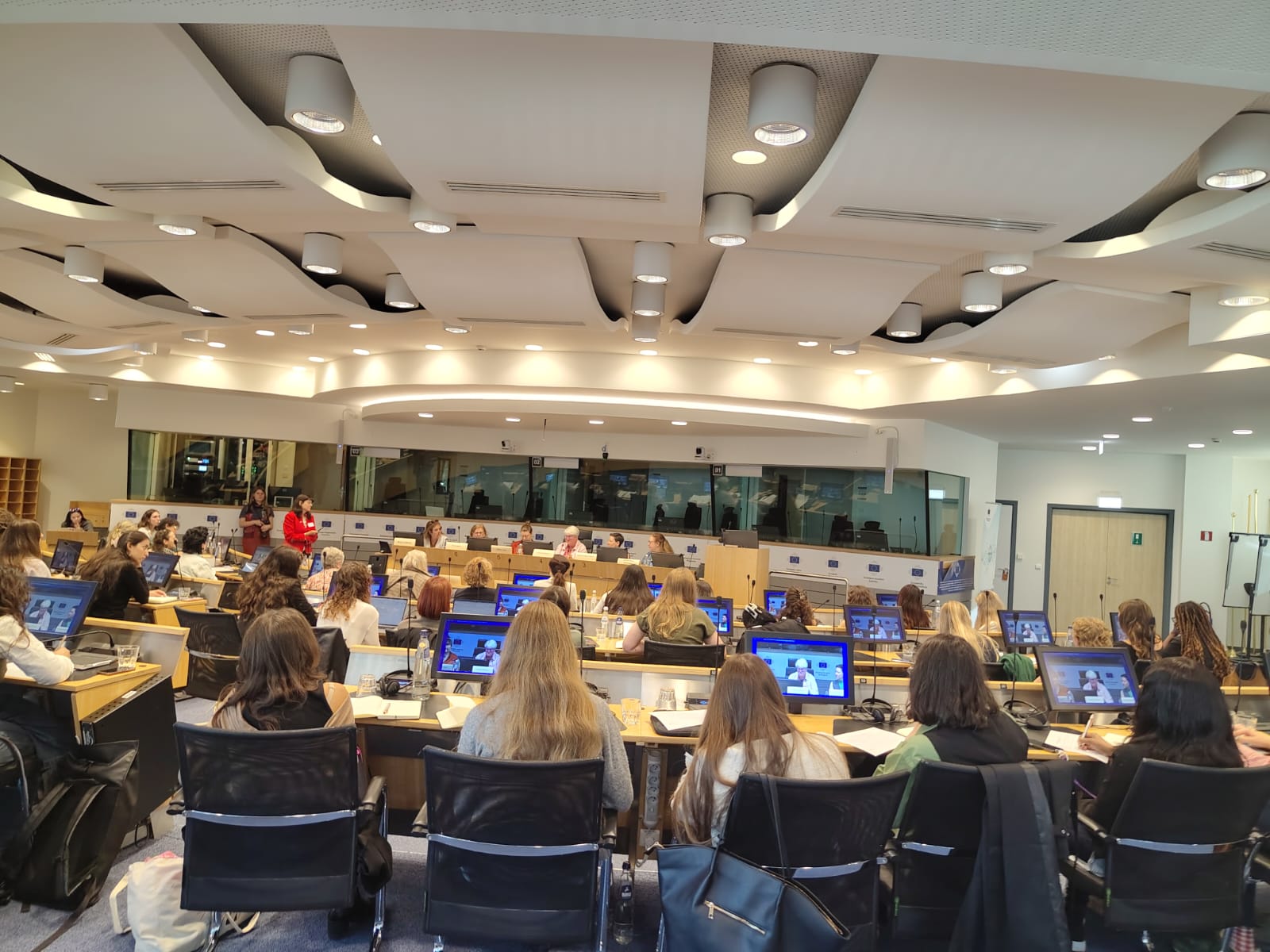
Almost 50 years after CEDAW, at an event at the European Committee of the Regions, Europe Is You: Young Feminist Leadership and the Institutions Within Reach (10 September 2026) speakers repeatedly returned to a fundamental question: how do we move from promises to change?
Where are we now?
The latest picture from the European Institute for Gender Equality (EIGE) Gender Equality Index 2025 shows that Europe has made progress, but that gender equality remains far from achieved. The EU scores 63.4 out of 100, with considerable differences between Member States. EIGE estimates that, at the current pace of progress, full gender equality remains at least 50 years away.
The question is particularly relevant for lifelong learning. Gender equality is not achieved simply by adopting legislation or strategies. People need the knowledge, skills, confidence and opportunities to participate in society, understand and exercise their rights, access decent work, navigate transitions and have a voice in decisions that affect their lives.
For lifelong learning, the Gender Equality Index on the topic of ‘Knowledge’ is particularly relevant. The 2025 Index gives the EU a score of 57.4 for knowledge. Within this, attainment and participation scores 78.7, while segregation scores only 41.8. These figures show that all EU Member States have a long way to go before gender parity in knowledge transfer, educational attainment and employment are reached.
EIGE’s 2025 Index also places a stronger focus on gender stereotypes, showing how deeply embedded ideas about women’s and men’s roles continue to shape choices and opportunities, particularly in specific careers.
Rethinking the care sector from a gendered lens
As highlighted during the CoR event, the right for better services and knowledge about women’s reproductive, sexual and health-related rights have recently gained visibility. This is particularly thanks to the “My Voice, My Choice” European Citizens’ Initiative, promoting access to safe abortions for all women across Europe. In the new Gender Equality Strategy, a gendered approach to healthcare is mentioned in the first time, highlighting the importance of this topic for EU citizens.
Anna Perez Escobedo, Associate Professor at the University of Barcelona*, highlighted that many Member States keep policies gender neutral, which complicates the follow-up and gender mainstreaming across policy areas, which the new EU Strategy recommends.
Despite this, the care sector is not gender-netural. The gendering of care starts well before people enter the labour market. According to recent EIGE data, men make up only 16% of graduates from Education, Health and Welfare (EHW) fields in vocational education and training (VET) in the EU. EIGE explicitly identifies EHW as a highly gender-segregated field and notes that the gender imbalance is even stronger in VET than in tertiary education.
At the same time, CEDEFOP identifies care assistants among the occupations experiencing EU-wide shortages. This raises an interesting paradox: there are more women than men in the care sector, yet female health care and rights are far from being universally recognised across member states.
It is in this framework that the Gender Equality Task Force for Lifelong Learning is organising a workshop on “Rethinking Care Careers: Gender, Skills and Wellbeing for Stronger Regions” during the European Week of Regions and Cities. In this workshop, regional policymakers in the French region Centre-Val-de Loire will present training policies to raise awareness of gender-based violence in care settings. We will explore VET policies on wellbeing and inclusion, including inputs from a representative from the Finnish Etelä-Savo region; EU standards from OSHA; and gender-sensitive good practices in adult learning.
You can find out more and register here: https://eu-regions-week.europa.eu/programme/current-edition/62236
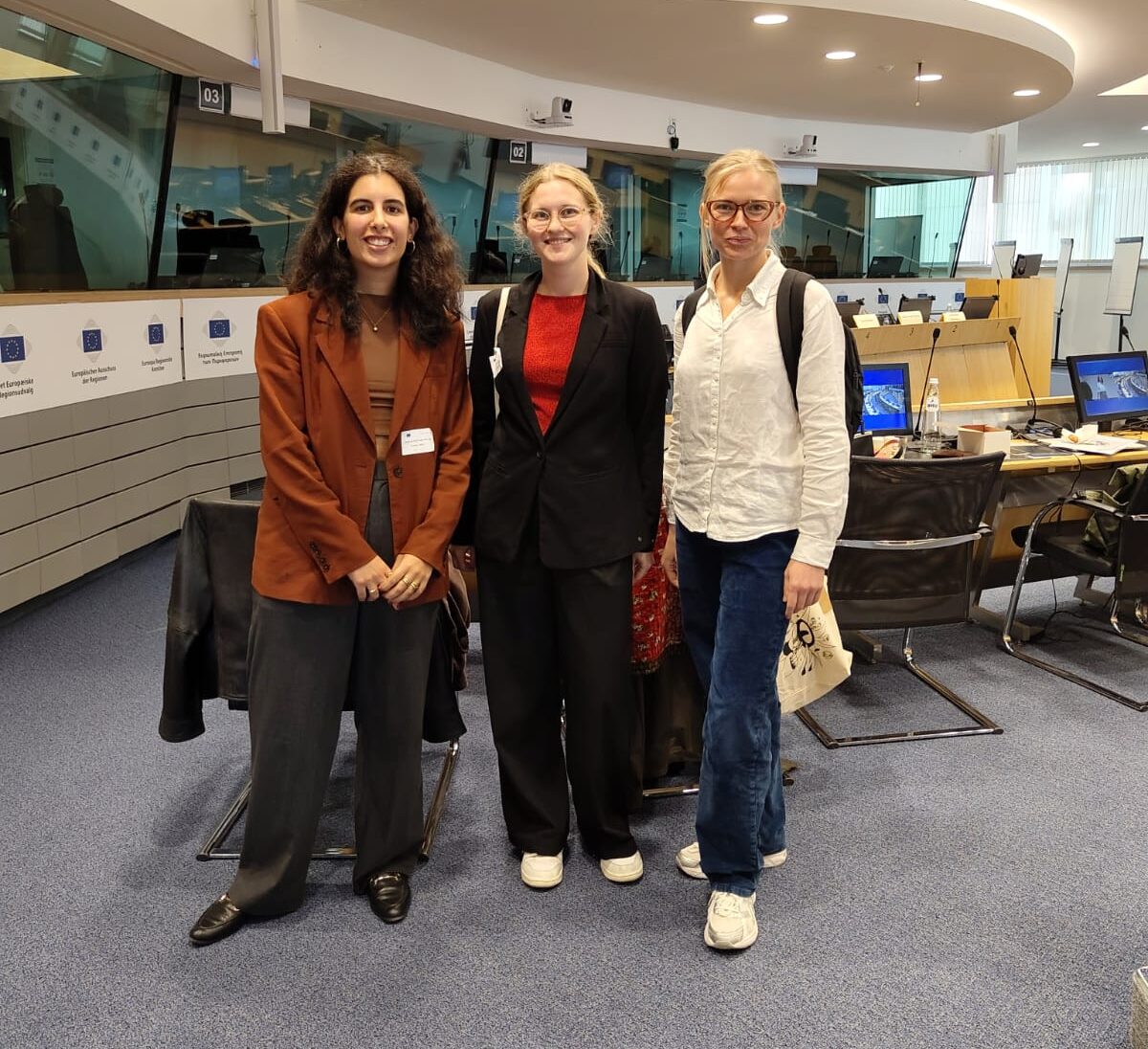
Maria Ribeiro (EAEA), Charlotte Ede (EAEA) and Olga Norak (EARLALL) representing the Gender Equality Task Force for Lifelong Learning at “Europe Is You: Young Feminist Leadership and the Institutions Within Reach” panel at the European Committee of the Regions, September 10 2026, Brussel
* During “Europe Is You: Young Feminist Leadership and the Institutions Within Reach” panel at the European Committee of the Regions, September 10 2026, Brussels.