
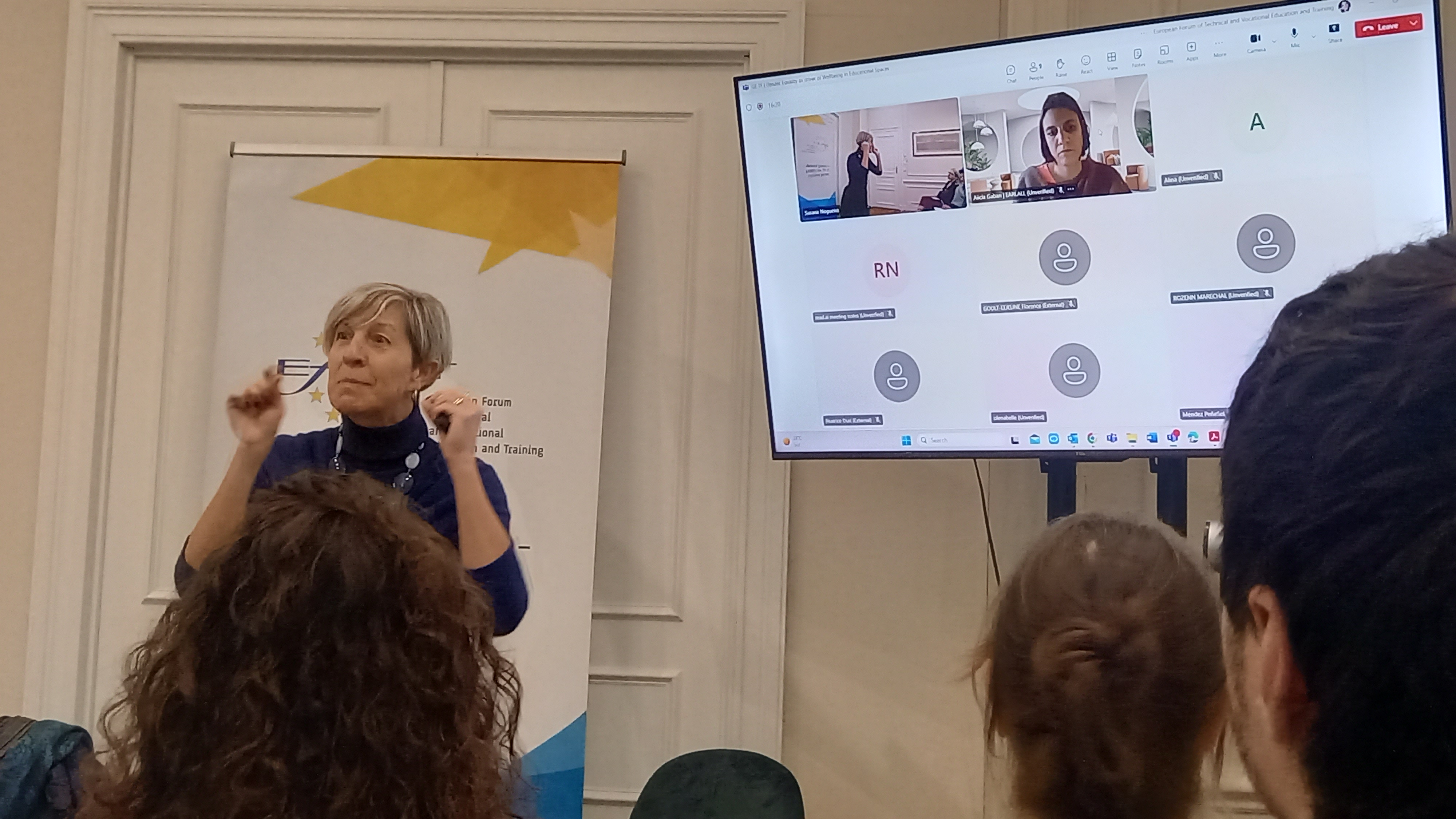
Moderated by Sylvia Liuti, a prominent expert in gender equality in education and chair of the Task Force, the event brought together participants in Brussels and online to explore how gender equality fosters well-being in both educational and workplace settings.
Sylvia Liuti kicked off the session by highlighting the importance of raising awareness about gender mainstreaming in workplaces. She explained that gender equality involves developing policies that recognize the different experiences of both men and women. Liuti emphasized the need for work-life balance policies as a key example. She warned that without gender-conscious approaches, inequalities are reinforced rather than addressed, limiting the effectiveness of various initiatives in education and beyond.
Discussions on good practices
Chiara Antonelli presented the menABLE project, led by European Schoolnet, which focuses on combating online gender-based violence (GBV) by educating young people and educators. Antonelli shared that the menABLE toolbox and MOOC provide valuable resources to tackle GBV in schools, helping to engage youth in creating safer online environments.
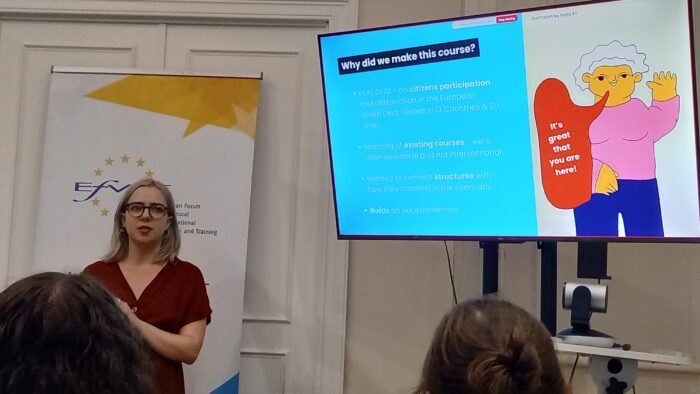
Rose Heffernan from Women Engage for a Common Future (WECF) introduced the concept of feminist moderation, drawing from the REAL DEAL project on citizen participation. Heffernan described feminist moderation as a method to create inclusive spaces where all voices are heard. She discussed strategies to address power imbalances, such as de-escalation techniques and bridging conversations to avoid echo chambers. Heffernan encouraged participants to join the online course “Feminist moderation: How to facilitate safe and inclusive discussions.”
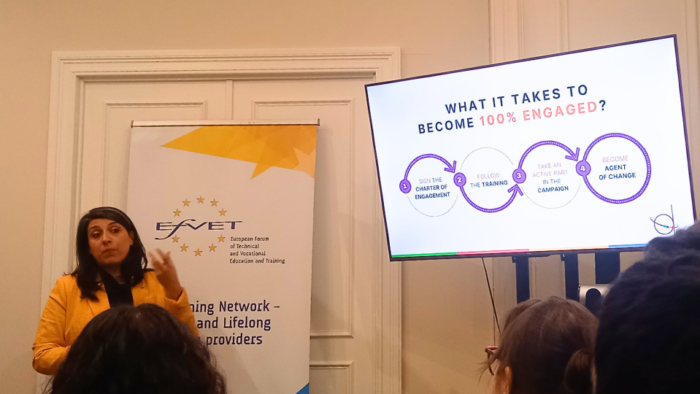
Alessia Sebillo from Diesis talked about how social economy enterprises can enhance gender safety at work. By involving small and medium-sized enterprises (SMEs) in initiatives to combat harassment, Diesis has developed resources for organizations that lack large HR departments through various EU projects. Sebillo shared that the program includes a training platform, engagement charters, and peer-led campaigns to promote safety and awareness across Europe.
Paula Mejía González from the European Trade Union Institute for Research (ETUI) introduced a self-monitoring tool designed for trade unions. This tool helps organizations assess their gender equality practices by examining areas like organizational structure, training programs, and inclusive competences. González explained that the tool encourages unions to integrate gender equality into their core operational values.
The session highlighted the vital role of gender equality in creating healthier, more inclusive educational environments and offered practical insights for various sectors.
Text: Charlotte EdePhotos: Marina Sakač Hadžić