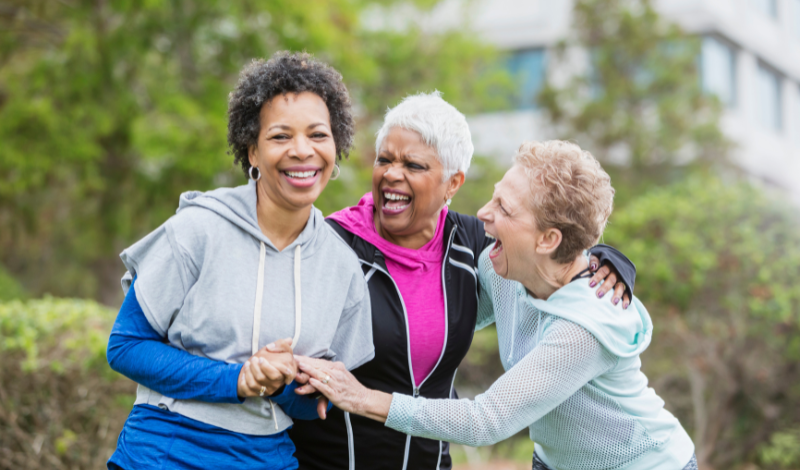
According to the World Health Organisation (WHO) definition, active ageing is “the process of optimising opportunities for health, participation and security in order to enhance quality of life as people age.” This 2002 definition makes it clear that active ageing is not solely related to physical health, but to participation and well-being.
2012 European Year for Active Ageing and Solidarity between Generations
In 2012, given all the concerns around rapid demographic change and the need to improve the inclusion in society of older adults, the European Commission launched the European Year for Active Ageing and Solidarity between Generations. This European Year acted as a framework to promote active ageing and solidarity between generations, focusing on awareness raising of the importance of older persons’ participation and on the need to combat age discrimination and stereotypes.
For the European Commission, promoting active ageing needs a comprehensive approach – tackling the challenges older people face in the labour market, social conditions, personal and family life, health and participation in society. Another important aspect is the need to improve “lifelong learning and active inclusion policies with the aim of creating opportunities at different stages of people’s lives, of shielding them from the risk of poverty and social exclusion and of enhancing their active participation in society”, recognising the importance of learning in later life for professional and personal fulfilment.
The European Year for Active Ageing and Solidarity between Generations (2012) also elaborated on the concept of active ageing, considering it “growing old in good health and as a full member of society, feeling more fulfilled in our jobs, more independent in our daily lives and more engaged as citizens.”
Once more, independence, fulfilment and societal participation play a key role in how we perceive the process of ageing. Still in 2012, the Council adopted the Council Declaration on the European Year for Active Ageing and Solidarity between Generations (2012): The Way Forward agreeing that the active ageing and intergenerational solidarity are key to the creation of a Europe for all ages, that this perspective should be mainstreamed horizontally and that lifelong learning systems are crucial for upskilling older generations. The Guiding Principles for Active Ageing offer recommendations for action in three areas: employment, participation in society, and independent living.
Other EU initiatives supporting active ageing
According to the European Commission, active ageing is now considered the policy directed towards ‘helping people stay in charge of their own lives for as long as possible as they age and, where possible, to contribute to the economy and society’. The new Commission features a Commissioner for, among other things, Intergenerational Fairness, Glenn Micallef, who is currently working on the Strategy on Intergenerational Fairness, which reinforces the communication between generations. This strategy is being co-designed in 2025 and will be launched next year 2026.
The Commission also promoted the European Innovation Partnership on Active and Healthy Ageing, gathering the relevant stakeholders to tackle the demographic change and create innovative solutions, with the use of digital technologies. This European Innovation Partnership aims at enhancing the quality of older adults, focusing on the improvement of health and social care systems.
The European Pillar of Social Rights, a key initiative by the European Union to strengthen the social dimension of Europe, includes a principle to ensure Everyone in old age has the right to resources that ensure living in dignity, proper income and pension rights. Other principles are directly relevant to older citizens, such as access to high-quality, affordable health care services and long-term care services, but also the equal treatment principle or the right to quality and inclusive learning opportunities.
When considering lifelong learning, educators and providers should consider the gender gaps, regional disparities and the digital divide, as older adults often lack the necessary digital skills to use basic services and be fully part of their community. By providing tailored learning opportunities for older adults, recognising the specificities and challenges of age, as well as the acquired knowledge and experience, providers promote cognitive functioning, social engagement, and continued personal development and fulfilment.
Furthermore, learning initiatives that consider the intergenerational aspect support the needed exchange between age groups, which can help tackle ageing stereotypes and give new purposes to older generations.
Ageing Well: Science-based habits of people who age well
Caregivers and adult learners are on the front line to ensure older people stay active and feel empowered to stay connected and to participate actively in their communities.
The Ageing Well project, in which EAEA is involved, has just realised a training programme for caregivers and practitioners working with older populations. The programme supported caregivers in considering older people’s needs and age-specificities, and ensuring the personal fulfilment and well-being of these adults.
The training programme is accessible in various languages and divided into lesson plans, which you can use in your organisation and implement training sessions with caregivers, adult learners and older adults!
Download the Ageing Well Training Programme!
Read more on the references of this article at:
- Active Ageing: A Policy Framework, World Health Organisation (2002)
- European Year for Active Ageing and Solidarity between Generations (2012)
- Council Declaration on the European Year for Active Ageing and Solidarity between Generations (2012): The Way Forward
- Ageing Europe: Statistics Explained (Eurostat)
Text: Maria Gonçalves RibeiroPhotos: kali9 from Getty Images Signature