“Personal, Social and Learning to Learn” (PSL) competence has been named as one of the key competences necessary for well-being (OECD 2003) and for lifelong learning (European Council Recommendation 2018). PSL impacts how we manage personal resources, social relationships as well as learning opportunities and career. It was chosen for the self-assessment because it is crucial in empowering adults, increasing their awareness of their own competences and enabling their full and effective participation in society.
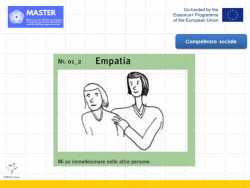
In Italy, the self-assessment and evaluation process was carried out by FORMA.Azione, through the use of two tools which were selected and adapted at pedagogical level by the University of Roma Tre. The tools used during the process are 1) the Questionnaire about the perception of one’s own competences and beliefs (QPCC) and 2) the Competence Cards for professional and immigration counselling. Both have been already tested, using different objectives and target groups from the MASTER self-assessment ones.
Due to the COVID-19 pandemic restrictions, the tools were tested online with the help of guidance and training professionals during three sessions:
- at the first session the professionals introduced the self-assessment process, objectives and the competences to be evaluated to users in small groups;
- the second session focused on individual self-assessment using one of the two selected tools;
- at the third session the professionals and the users discussed the outcomes of the self-assessment process, through a report combining their strengths and competences to be improved, possibly through tailor-made courses, to be developed also on the basis of the self-assessment results.
The innovative elements of the MASTER self-assessment process include:
- Focus on PSL competence – it represents a wide range of skills that apply to all spheres of life and that, favoring self-awareness, are essential for the re-engagement of low-skilled adults;
- Bottom-up cooperation between private adult education providers and the Public Employment Services – professionals from public and private domains cooperated together in the same organisational framework, building common approach and methodologies and are currently working for systematising the practices they built;
- Involvement of the users in a process and giving them the opportunity to make them more aware of their skills, to improve their self-esteem, to reflect about the possibility to learn also from failures, to gain relevant information for their future participation in re-skilling paths and, as side effect, to improve their digital competences with specific reference to the use of video-conference tools.
Text: Chiara Marchetta (FORMA.Azione), MASTER project manager
MASTER is an Erasmus+ KA2 project that aims to develop and/or reinforce personal, social and learning competences, which are considered vital for the re-activation and re-engagement of potential learners from vulnerable groups. The project aims to reach adults who fall into the following categories: long term unemployed; socially vulnerable adults; adults from a migrant background.
Partners in the project are FORMA.Azione, Italy; Università degli Studi Roma Tre, Italy; SWAPWest, Scotland; Kerigma, Portugal; DOREA, Cyprus; and EAEA, Belgium.
Visit us on Facebook @eumasterproject and LinkedIn