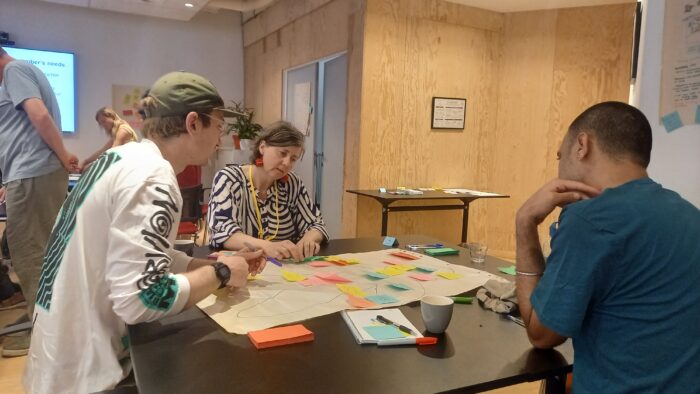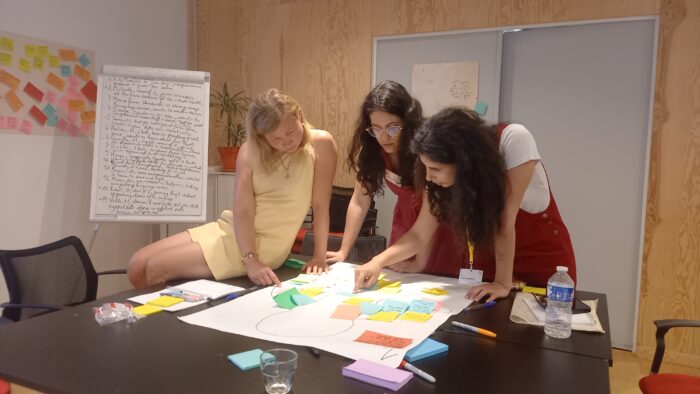
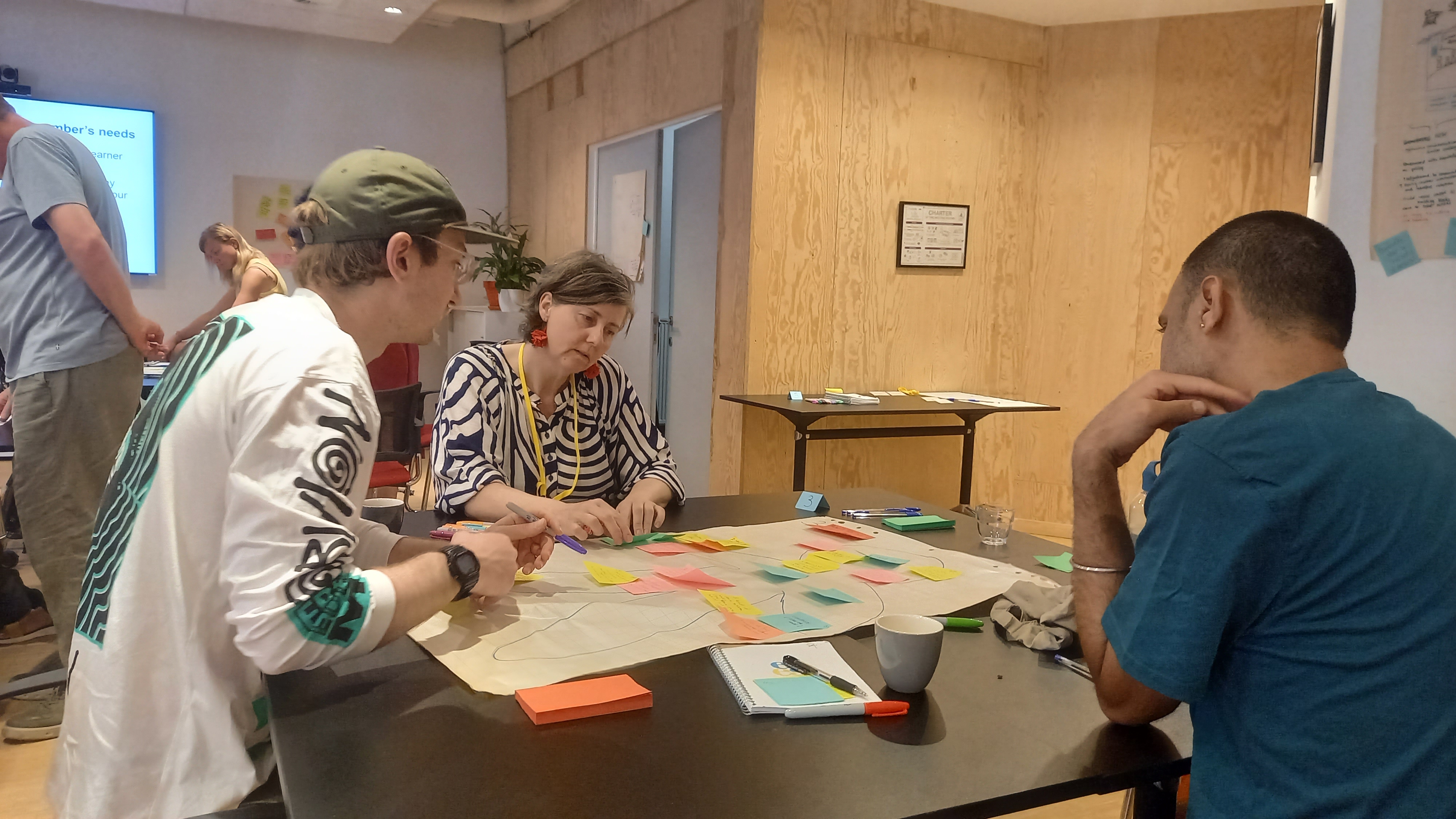
The LEVERS training gathered 13 participants and was organised by the UCL Climate Action Unit and hosted by the European Association for the Education of Adults.
On the first day, participants were invited to reflect on what drives them to address climate change, and use this as a starting point to begin to reflect on building a climate action plan. Kris de Meyer, Jonathan Mille, and Annie Risner from the UCL Climate Action Unit described the Climate Action’s approach, whereby they draw on insights from neuroscience, psychology, and systems thinking. Key insights include “actions drive beliefs,” “fear won’t do it,” “talk to the Elephant,” “manage Ginger,” and “how to deal with Pyramids” (see here for more on the insights).
On the second day, participants developed their knowledge further about the six-step process to building a climate action plan. Particulart emphasis was put onto definiding the values of the people or institution that you are building a climate action plan for. Values are important because they explain how the same behavior can have different motivations based on underlying values, categorizing people into “settlers,” “prospectors,” and “pioneers.” The document notes that people involved in climate education are often pioneers, making it difficult to understand the motivations of other segments.
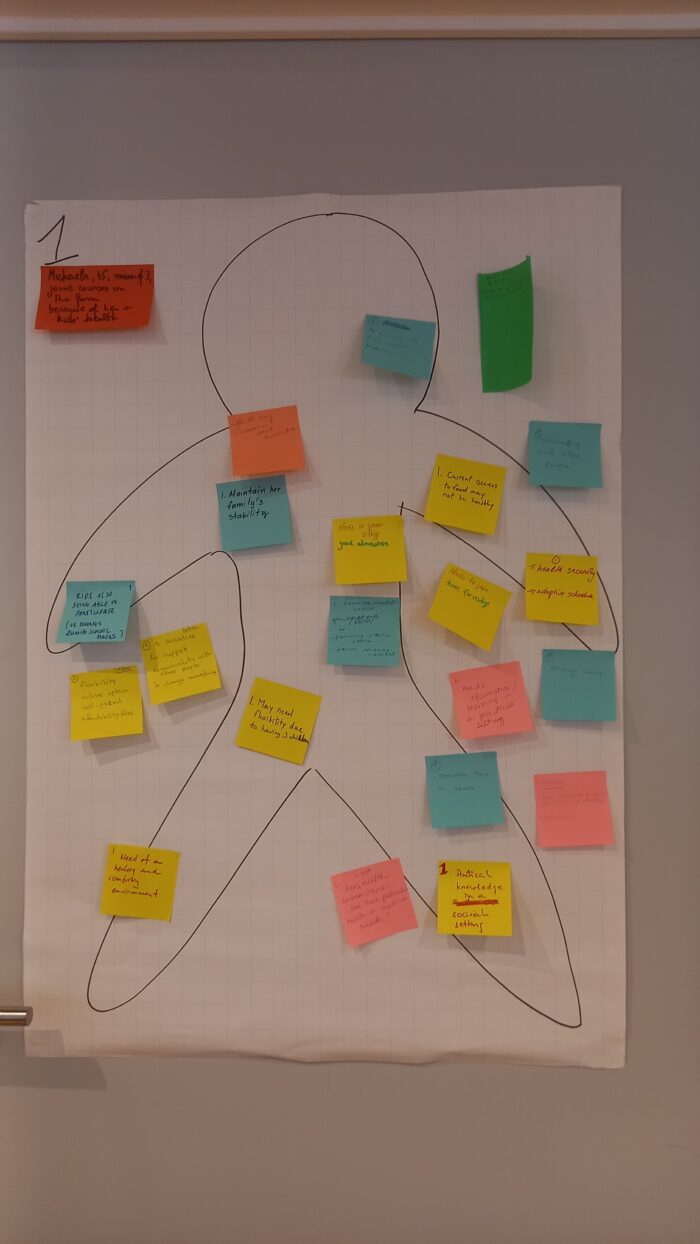
On the third day, participants focused on adult learners and sustainability. Activities focused on creating portraits of adult learners and identifying their needs. These needs were then used to brainstorm relevant sustainability and climate actions that speak to those needs, focusing on decarbonization, biodiversity, adaptation/resilience, and climate education/green careers.
The training was an opportunity to solidify the use of the key insights and tools that the LEVERS project generated (e.g., Elephant and Rider, Pyramid of Polarisation, Actions drive beliefs), systems view, goal setting, four pillars of climate action plans, six-step process, and the “midwife and mechanic” approach. These tools and insights can be used throughout institutions, involving many learners, trainers and staff, to ensure a whole-setting approach. The training highlighted the need for ongoing focus on adult learners and the benefit of insights and action-driven response to the climate crisis.
Find out more about the LEVERS – Fostering active engagement in climate education – Horizon Europe project.