
What was the main purpose of this project?
“Integration and support policies for newly arrived foreigners need to be modernised. Grass-rooted organisations and social workers as well as innovation projects represent corner stones for rethink the coordination of actions and policies aiming to promote a successful integration path for migrants. Nevertheless, we are currently facing a lack of coherence between states, services, administrations, NGO’s and civil society that leads to low performance and major difficulties to foster a complementary approach.
In the existing context, migrants struggle to understand who does what and why. Our main motivation in the TCI projects (cf. Travailler en Contexte Interculturel – Working in an intercultural environment) is to train social workers (and their organisations) to intercultural competences and awareness. By doing so, we are able to foster cross-sectorial dialogue and management, which facilitates cooperation. TCI creates more efficient and effective collaboration among stakeholders in their mission of helping migrants to create their own social and economic integration path.”
How did the project foster cooperations and partnerships?
“First, it is necessary to restore trust between stakeholders. There must be a radical change in the culture of the organisations that currently accompany newly arrived foreigners, whether we are talking about NGO’s, associations, state administrations or civil society. It is necessary to learn how to create successful collaboration. To meet these challenges, TCI seeks to assist them in finding innovative solutions; we are helping stakeholders to build inter-institutional and intercultural dialogue that will contribute to create successful integration models for social and economic integration.
TCI foster long term cooperation by raising awareness on the obstacles on intercultural communication which creates a better environment to promote collaboration. We are placing the accumulated expertise of grass root practitioners and organisation at the heart of their own diversity management strategies. Insofar as we invite stakeholders to participate in this mission, TCI demonstrates an intercultural approach that recognizes existing knowledge, offers horizontal and symmetrical sharing and creates the conditions for dialogue and cooperation.”
Integration and support policies for newly arrived foreigners need to be modernised. Grass-rooted organisations and social workers as well as innovation projects represent corner stones for rethink the coordination of actions and policies aiming to promote a successful integration path for migrants.
What was the best practice learnt from this project that you want to share?
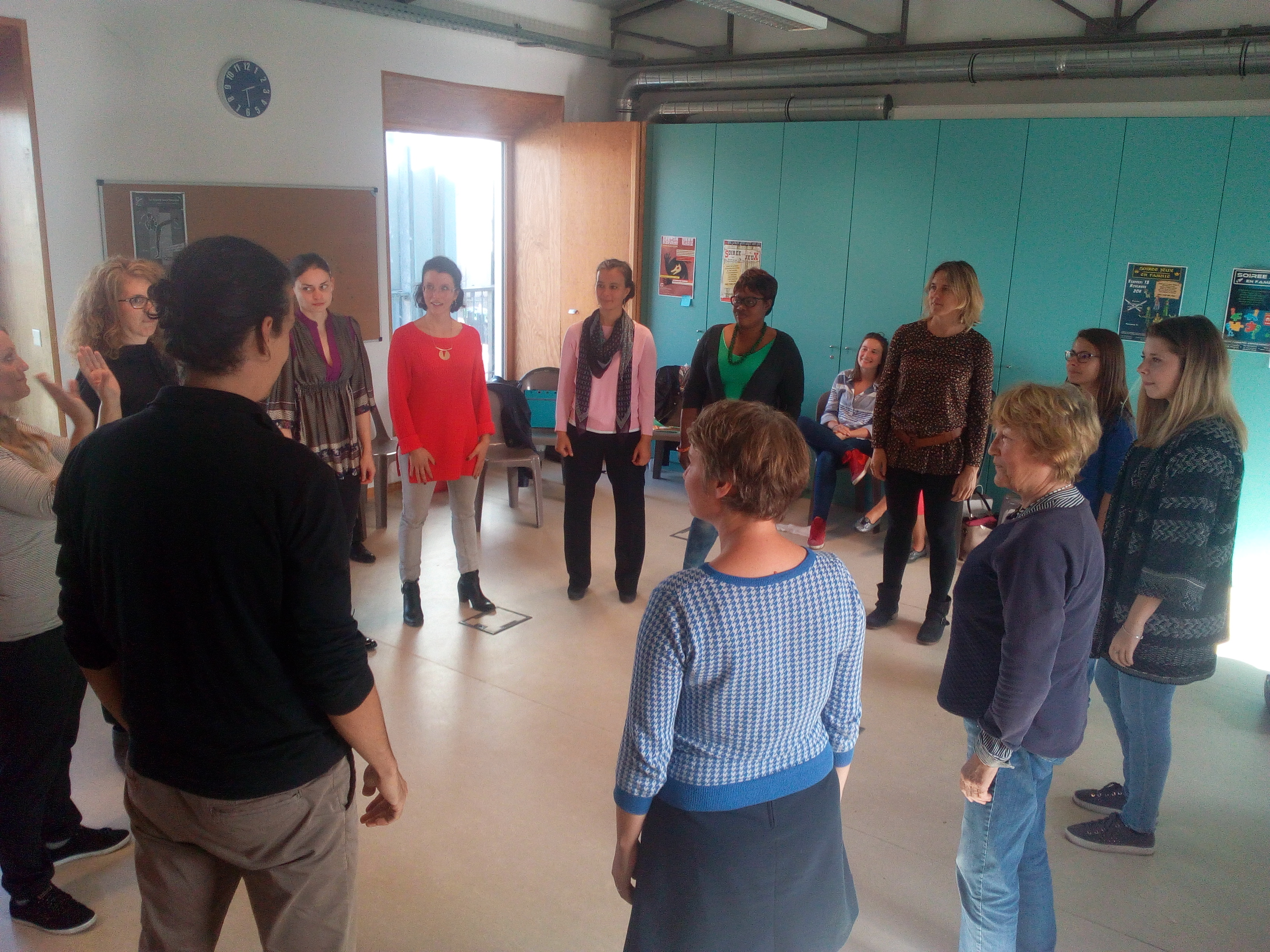
“The best practice was tested in the context of a collaboration agreement with the French Ministry of Home Affairs to intervene at the national level with integration of newly arrived migrants stakeholders. Our specific pedagogical objectives was to improve the quality of the integration process by adding value to existing practices in order to build coherence and cooperation among these stakeholders. To achieve our objectives, the TCI project is divided into two phases: JA (Journée d’Actualité) and AMI (Atelier de Mutualisation Interculturel). First, we propose an alternative format of theory and practice through case studies based on the professional experiences of learners and reflection activities from non-formal education and critical pedagogy (cf. Paolo Freire).
This first awareness-training day has three modules:
- Raise awareness about the intercultural approach
- Understanding work in an intercultural context
- Manage teams facing diversity in organizations
In a second step, we organize workshops (AMI) to address issues related to:
- Collaboration and communication in intercultural context
- Building lasting partnerships
- The sociology of institutions
- The strategy of a diversity management policy
Our goal is to initiate reflection on what ‘Working in an Intercultural Environment’ (TCI) means. Through our method, professionals come to understand the importance of cooperation with stakeholders while integrating the basic elements of diversity management. By the end of our training project, stakeholders understand the difficulties and challenges of building a group dynamic but also the importance of creating good cooperation strategy.”
Working in an Intercultural Context
Category: National projects
Coordinator: Elan Interculturel
Country: France
Focus: Migrant inclusion, professionalisation of staff
Innovative cooperation: Cooperation with public authorities, NGOs, health and social sector
Resources:MoMap tool
Text: EAEAPhotos: Elan Interculturel