
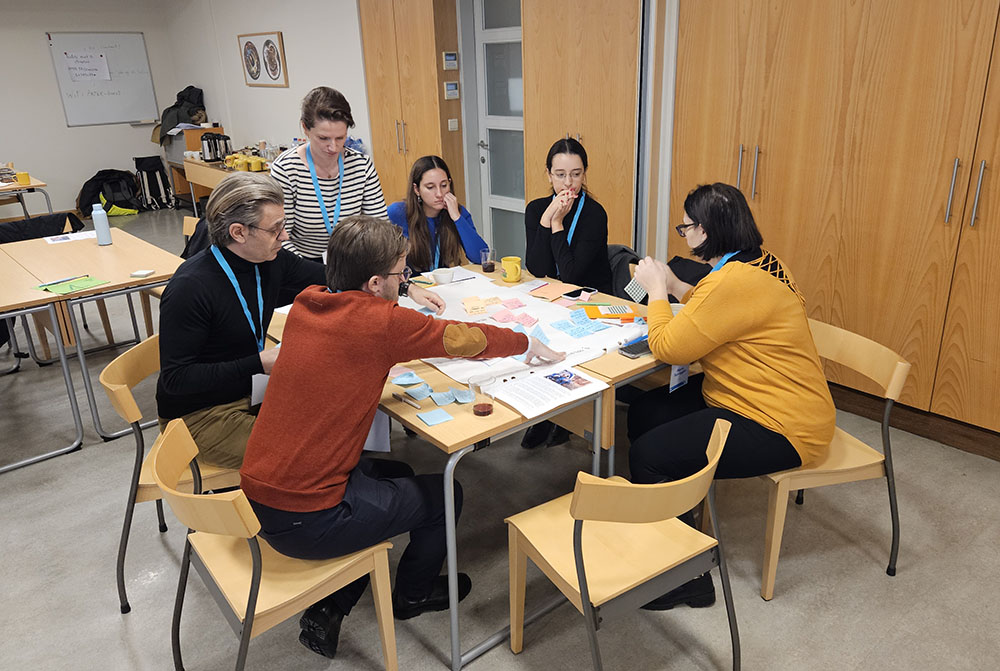
EAEA took part in the 2024 edition of the annual Lifelong Learning Week, an initiative of the Lifelong Learning Platform. The theme of this year’s edition was on 21st century challenges for the educator profession: a call for system change. EAEA took the opportunity to organise three events during the dynamic week. The events were a success and gathered more than 60 participants.
Enhancing Learners’ voices: Learning to Listen
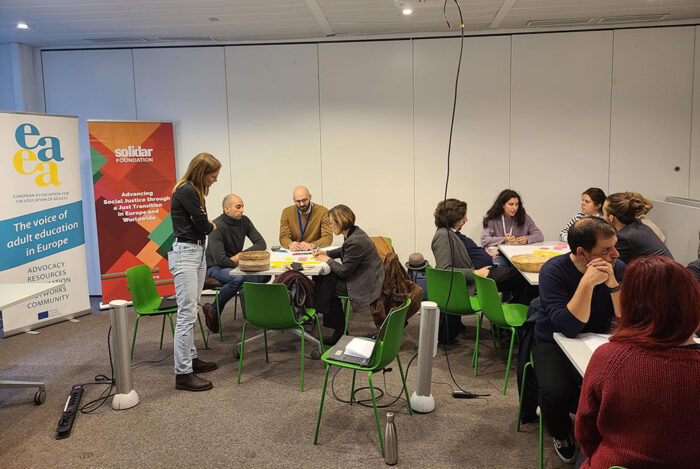
On November 21, EAEA co-organised a workshop on “Enhancing Learners voices: Learning to Listen”, facilitated by Angeliki Giannakopoulou, Policy and Project Coordinator at EAEA and Alexandra Matthys, Education and Lifelong Learning Policy Officer at SOLIDAR.
During the two-hour workshops participants discussed the challenges, reasons and actions to be taken for the inclusion of the adult learners’ voices in decision-making and participatory learning. The identified challenges included culturally engrained rigidity in education, leading to apathy and lack of motivation to voice their opinions, as well as a lack of empowerment of students. Moreover, they had an opportunity to debate and create a vision for open spaces where the voices of adults are listed to. The emphasis on co-creating spaces where learners feel heard—and where educators develop the skills to actively listen—calls for a paradigm shift in how educational structures are designed.
ENHANCE (Enhancing Adult Learners Voices) is an EU-funded project running from December 2023 until May 2026. The project intends to enhance adult learners’ voices by creating learning spaces where the educational process is based on the voice of the learner. This inherently democratizes the educational process, leading to a deeper connection with both society and the learning topic at hand.
What is the role of educators for quality assurance?
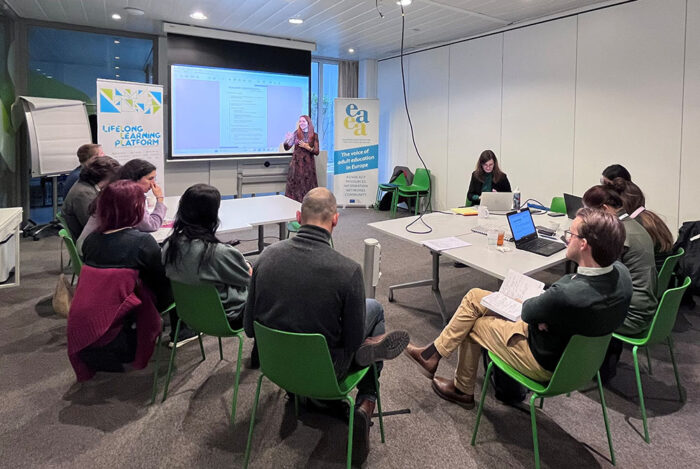
On November 21 2024, EAEA organised a session on the role of educators in quality assurance, held in the context of the EU-funded RALExILA project. The workshop explored the role and importance of educators in quality assurance processes in adult learning.
Anna Skocz, NGO Trainer’s Association/Stowarzyszenie Trenerskie Organizacji Pozarządowych sTOP, presented a Polish model for quality assurance that is based on self-reflection and recognition through experience. Guided by Deputy Secretary General and Head of Policy Raffaela Kihrer, participants were then divided into groups to discuss the potential role of educators in quality assurance, a discussion which highlighted the difficulty in allocating responsibility for standards in adult education.
RALExILA seeks to propose a solid approach for the development of Adult Learning and Education registries across Europe by enhancing transparency, quality assurance, and user-friendliness of ALE training registries.
Design Thinking for Inclusive Education: Connecting Families and Educators
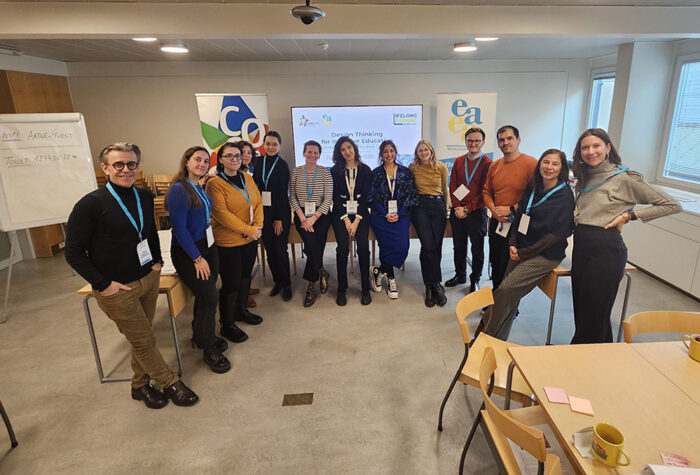
On November 22, EAEA co-organised a workshop on design thinking for inclusive education with COFACE Families Europe. Participants explored Design Thinking methods to create actionable ideas for more inclusive education policies.
Beybin Tunc, Senior Education Program Coordinator, COFACE Families Europe, and Greta Pelucco, Policy and Research Coordinator at the EAEA, led participants through a family-based case, which revealed how the skills and experiences of family members could be better served through more inclusive policies in education. Participants left with a new empathy-based approach to policy making.
Text: Charlotte Ede