
“For a long time, we have been talking about sort of a triangle, which would consist of research and policy and practice,” says Gina Ebner, Secretary General of EAEA. “It is important, and it can actually benefit practice if we have evidence and can act in a more-evidence-based way. That is true for policy, but also for practice. There are several things that we can take from ESREA and the studies they’re doing: how well or not well we are doing in certain areas, and to ground ourselves in a theoretical basis.”
Marcella Milana, Chair and Board member of ESREA, also sees several benefits of collaboration between research and practice.
“In an ideally virtuous cycle, research knowledge can be translated into practice, and practice knowledge can contribute to new research. Taken together, knowledge from research and practice can better inform policy, but also challenge political assumptions that are not grounded in research evidence or practice experience, and advocate for better policy solutions,” says Milana.
She illustrates how it can work in practice.
“Researchers may gain better access to non-formal adult education providers across Europe, as research sites, or to adult educators and learners as research subjects. Researchers can also contribute knowledge to capacity building events or policy briefs and statements that EAEA organise or produce.”
This conclusion is far from new: EAEA and ESREA have collaborated for years. Both Ebner and Milana have several examples to share.
“We’ve always had overlaps in the people who have worked for both ESREA and EAEA,” recalls Ebner, who describes ESREA as EAEA’s “sister organisation”.
“Several researchers from ESREA, including convenors of its thematic research networks, have partaken in EAEA’s projects in an individual capacity or serve in EAEA’s Executive Board,” complements Milana.
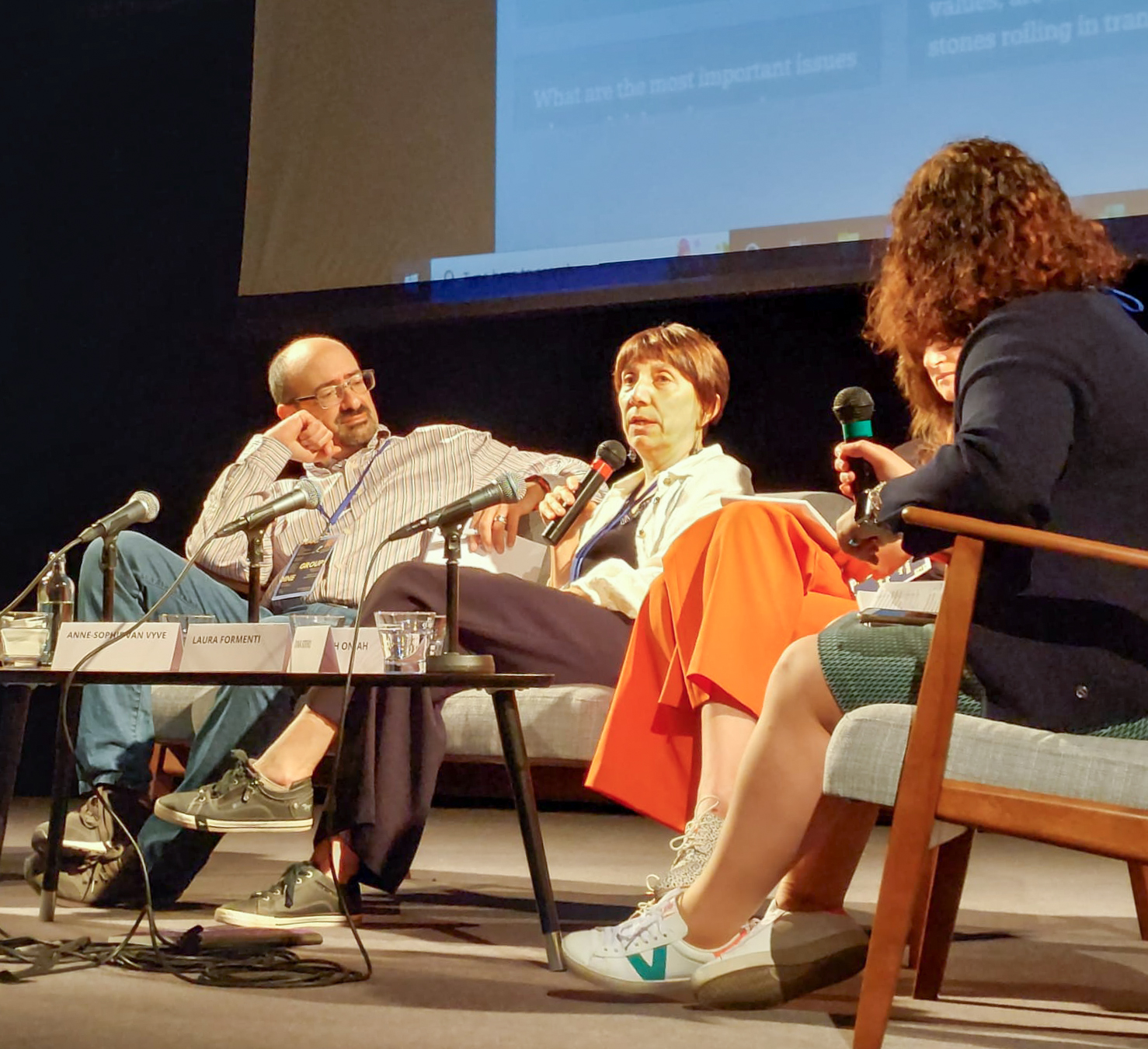
Both organisations have also contributed to each other’s events. For example, ESREA’s Laura Formenti was a panellist at EAEA’s Annual Conference on Transformative Learning and Values, which took place in May 2022 in Mechelen, and Ebner spoke at the ESREA Triennial Conference in Belgrade in 2019, as part of a symposium organised by the Policy Studies in Adult Education network.
Based on the success of the collaboration so far, the EAEA Executive Board and the ESREA Presidium have agreed that this approach should be taken further.
Both organisations will continue to be present at each other’s events. Most recently, ESREA’s Maja Maksimovic and Fergal Finnegan, who are both Convenors of the Active Democratic Citizenship and Adult Learning network, were guests on EPALE’s podcast on Safe Spaces in Adult Learning and Education, in a conversation facilitated by EAEA’s Head of Stakeholder Engagement Christin Cieslak. In December, Srabani Maitra, a Convenor of the Migration, Transnationalism and Racisms Network, will speak at EAEA’s online discussion on adult learning and migration.
As agreed by both organisations, capacity building will be an important focus of the new collaboration between both organisations; EAEA and ESREA are currently exchanging ideas of a training that could bring together practitioners and researchers around a shared topic of interest.
“I think that’s really quite an important exchange. It should take both organisations further and closer to the reality of learners and all organisations,” concludes Ebner.
Text: Aleksandra Kozyra, Maja MaksimovicPhotos: EAEA