

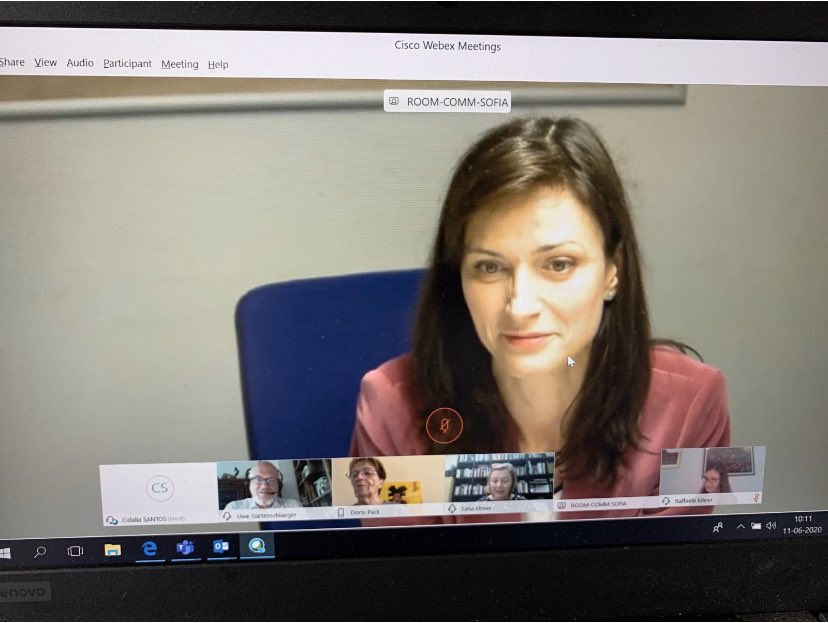
Basic digital skills urgently needed
Mariya Gabriel emphasised the importance of basic digital skills. “We know that 90% of all jobs in the future will require basic digital skills. However, a large part of the population does not yet have these skills,” she said, adding that adult learning plays an important role in providing these skills.
“During the past weeks and months, the crisis has revealed the large digital divide among the population and the receptiveness to fake news and ‘alternative facts’, when people do not have adequate basic digital skills and literacy,” said Mr Uwe Gartenschlaeger, pointing out also that the adult learning sector has done enormous efforts in digitising training programmes as well as institutional infrastructures since the beginning of the coronavirus pandemic.
A public consultation on the Digital Education Action Plan, to be launched in the third quarter of 2020, will give an opportunity to adult learning organisations and providers to have a say on digital skills provision.
Current European strategies in adult education miss the heart of the sector
EAEA also discussed a potential follow-up of the European Agenda for Adult Learning with Commissioner Mariya Gabriel, and, while she admitted that no comprehensive strategy for adult learning and education at the European level has been planned yet, she recognised the importance of an overarching strategy for this sector. Mariya Gabriel also said that she is working, together with Commissioners Nicolas Schmit (Jobs and Social Rights) and Elisa Ferreira (Cohesion and Reforms), towards more coherence for formal and non-formal adult learning.
Uwe Gartenschlaeger, EAEA President, and Gina Ebner, EAEA Secretary-General, stressed that the Skills Agenda and its Upskilling Pathways have been very valuable for adult education. “However, they are missing the heart of our sector,” said Ms Gina Ebner. “Life skills and competences, such as social skills, but also skills for health and well-being, are central in times like these. This part of adult learning has to be recognised and integrated into European policy-making.”
“I’m aware of the fragmentation of the adult learning sector in Europe,” said Ms. Mariya Gabriel. “Education remains a responsibility of each EU Member State; however, what we aim to do, from the Commission’s side, is to introduce basic standards for all types of education in Europe.” The European Commission’s forthcoming work of an expert group on micro-credentials will tap into this issue. Micro-credentials can provide a possibility to validate skills and competences acquired in non-formal learning settings.
EAEA thanks Commissioner Mariya Gabriel for the fruitful discussion and is looking forward to providing input on the development of European adult learning and education in the months and years to come. We would also like to thank Ms Doris Pack for making this meeting possible and for helping to promote European adult education.
Text: EAEAPhotos: Mariya Gabriel