

What was the main purpose of this project?
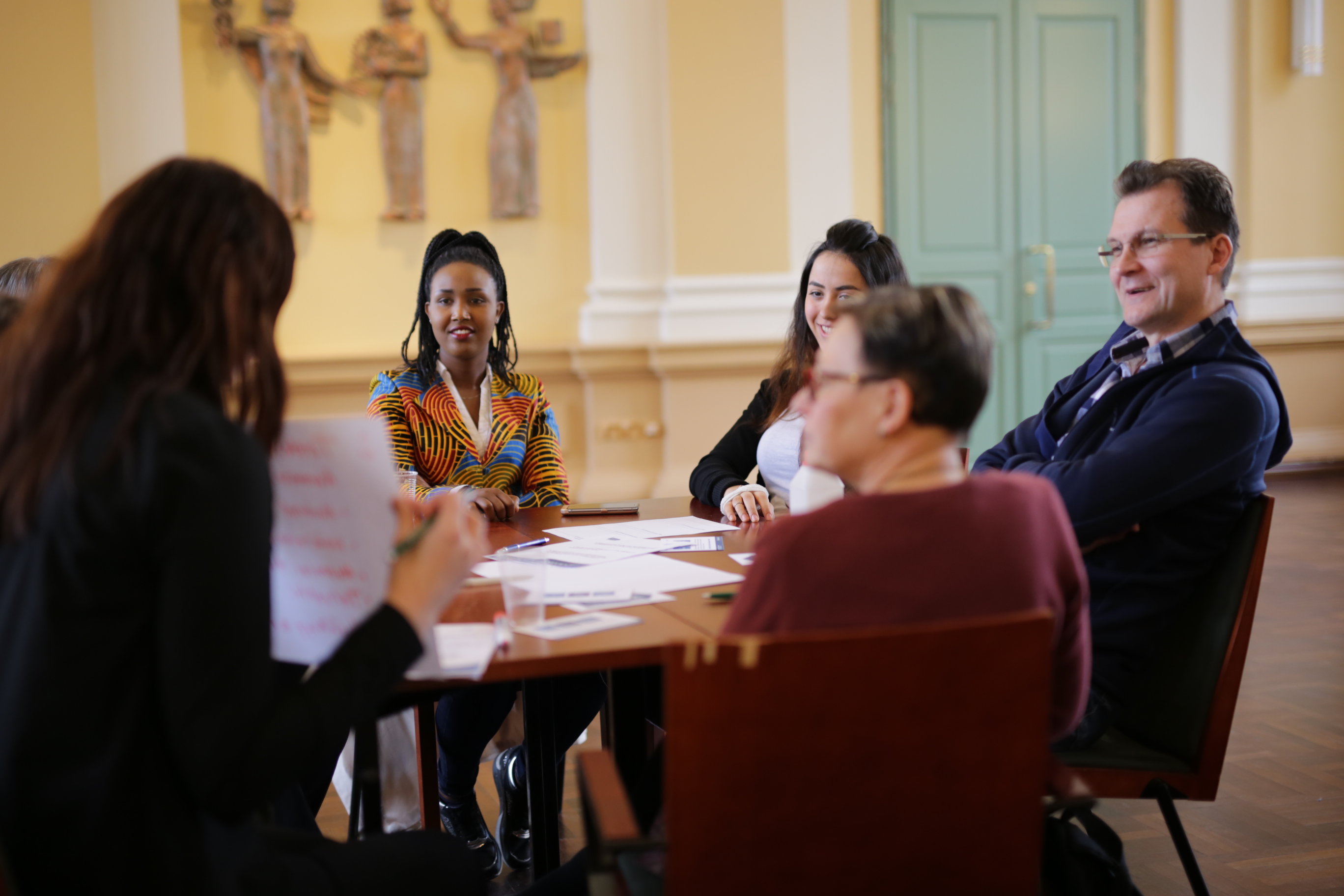
“The purpose was to implant a new method of civic discussions to the adult education culture. To bring ordinary people from all backgrounds and ages together in an informal setting to discuss wellbeing of contemporary and future Finns. The discussions were arranged in cooperation with local adult education centres which host the events. This was done to teach the method to the personnel to be used later on in their work. Open access discussions were also a way to introduce the adult education centres and their work to a new customer base.”
How did the project foster cooperations and partnerships?
“The adult education centres involved were not selected by hand, instead the invitation was spread throughout the adult education field and any of the organisations interested were taken in as partners. The interest exceeded expectations: although the initial goal was to organise ten discussions, eventually there were 29 of them.
Open access discussions were also a way to introduce the adult education centres and their work to a new customer base.
Amongst the organisers were adult education organisations in Finnish speaking communities in Sweden and Spain. The compilation of the outputs of the discussion was delivered to the policymakers of each city where the discussion was organised. Additionally, the compilation of all the discussions and the project was presented to the Prime Minister of Finland.”
What was the best practice learnt from this project that you want to share?
“Typically participants were a bit reserved when they first enter the discussion venue. But once the conversation started flowing, it was hard to stop it even when time ran out. People discussed the themes even on breaks. Most of these people were strangers to each other. People have a profound need to be heard and when this is met, it is possible for them to start improving the skills of listening and from there on understanding and respect of different views.
These conversations have proved to be quite profound learning experiences. I recall the words of one participant after a discussion: ‘I learned so much of other realities today. I live a stable pensioner’s life, and although I am active in my community, I had no idea that people can have such different lifestyles and ideas.'”
100 steps towards Finnish future
Category: National Projects
Coordinator: The Finnish Lifelong Learning Foundation, KVS
Country: Finland
Focus: Citizenship education
Innovative cooperation: Civic discussions hosted by adult education centres
Resources: Website, Instagram gallery
Text: EAEAPhotos: Anne Tastula / KVS