Home » News » Resilience-building in ALE from a community perspective at the ABC of ALE training 2026
05.10.2026ABC of ALE, advocacy, trainings
Resilience-building in ALE from a community perspective at the ABC of ALE training 2026
What is the role of ALE in strengthening our democratic societies? How can we build community and resilience? These were the core questions of the ABC of ALE training 2026, organised from 28 September to 1 October by EAEA and supported by CVO Crescendo.
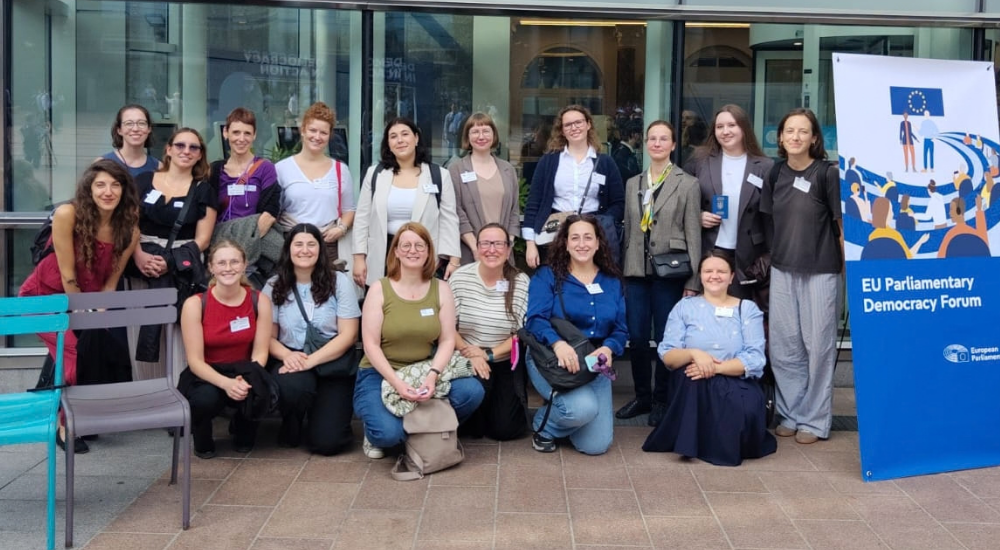
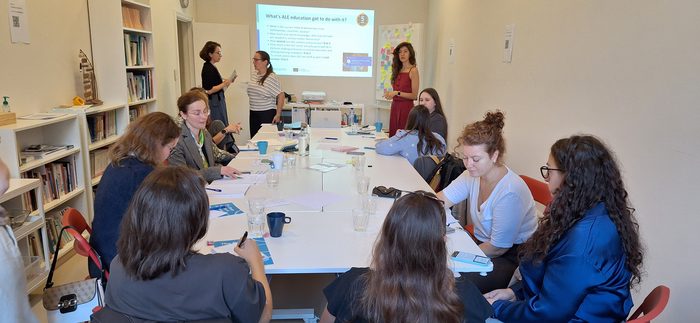
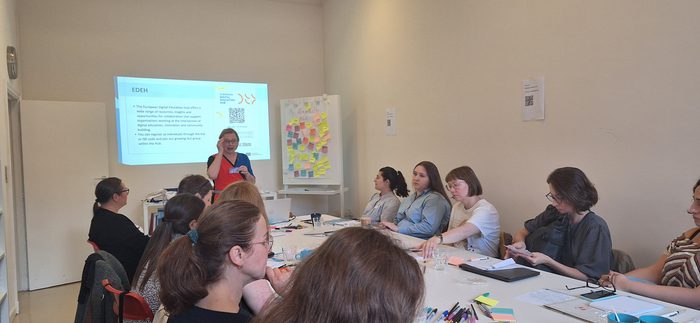
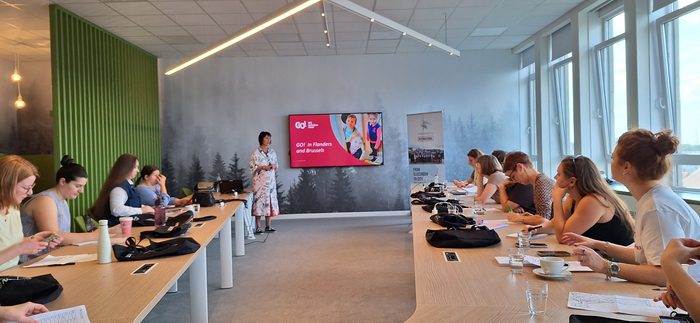
On a sunny week in late September, 12 participants from across the EU network and beyond gathered in Brussels to learn about Adult Learning and Education from EAEA’s perspective, with a particular focus on the role of ALE actors in advocacy and community-building.
The training began by setting the stage for what adult learning and education mean in practice. Led by Marina Sakač Hadžić, EAEA’s Communication, Capacity Building and Membership Officer, participants were introduced to EAEA’s mission and history, as well as the roots of Bildung, based on the idea that education fosters self-awareness and personal growth. The session also encouraged reflection and set expectations for the days ahead.
Exploring the role of ALE in advocacy & democracy
Greta Pelucco, Director of Policy Affairs at EAEA, facilitated a discussion on the relationship between adult learning and democracy, exploring how education can shape democracy, critical thinking and participation. The session led to the introduction of the European Democracy Shield and the EU Civil Society Strategy and its focus on the role education has played in shaping a societal narrative in countries for centuries.
Participants reflected on the role of ALE providers not simply as education providers, but as community spaces where people meet, exchange perspectives, develop confidence and learn to participate in society.
The discussion connected these roles to advocacy, highlighting how ALE organisations and civil society can contribute to democratic decision-making and resilient communities. Participants were invited to consider a central question: if democracy depends on people’s ability to understand, question, participate and organise, can adult learning be understood as part of Europe’s democratic infrastructure?
A visit to the European Parliament
A highlight of the training was stepping into the hub of European democracy at the European Parliament for the EU Democracy Forum. Discussions highlighted the importance of trusted relationships, grassroots communities, civil society and educators in strengthening democratic resilience and engaging citizens.
A key message was that civil society should be treated as a genuine partner in democratic decision-making, with meaningful and early involvement rather than consultation only after decisions have already been made.
The Forum brought these discussions directly into the context of EAEA’s 2026 theme of resilience and community-building, showing how ALE can create the skills, trusted spaces and community connections that enable people to participate actively in democratic life.
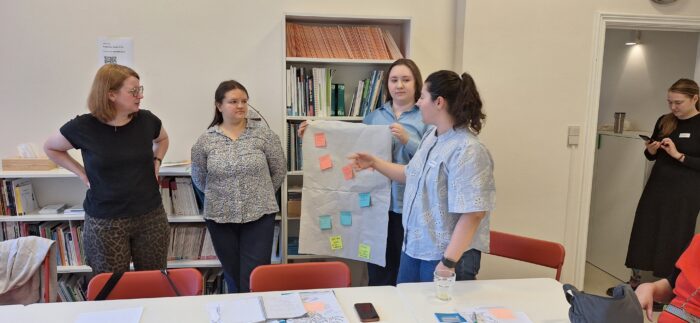
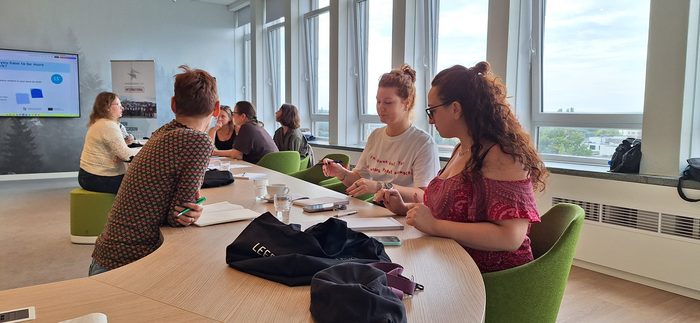
Participants further explored the annual theme through a workshop led by Charlotte Ede, Learning & Project Coordinator, where participants designed their own roadmap towards a future resilient ALE ecosystem embedded in local community. Innovative aspects of the roadmaps included civic and media literacy as core stages, open days with local communities and outreach work.
For me, resilience means staying flexible and solution-oriented when unexpected situations arise” – Response from an ABC of ALE 2026 participant to: what does resilience mean to you?
ALE Centres as Community Anchors
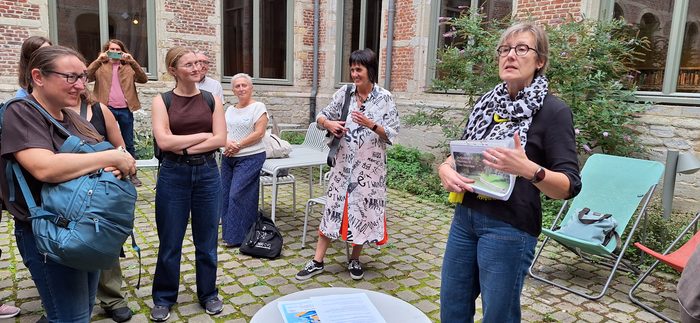
A visit to CVO Crescendo, part of the GO! education network and a member of EAEA, demonstrated how adult education centres can act as community anchors. Ariane Jacobs presented their approach to being “close to the community”, including work in prisons and primary schools, as well as collaboration with local literacy organisations, libraries and the town of Mechelen.
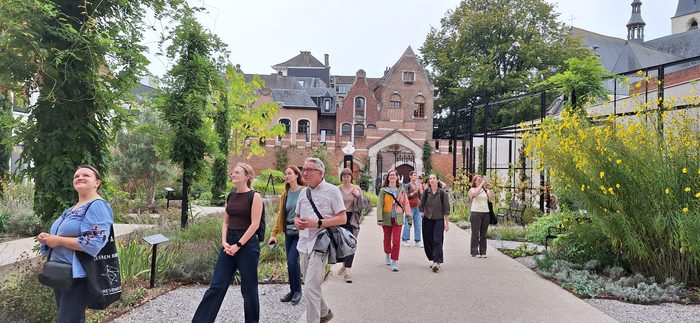
Participants experienced the benefits of community-based programmes through an interactive tour of Mechelen, guided by the Mechelen Ambassadors, a result of a training programme run by CVO Crescendo.
“I liked the study visit to Mechelen the most, it was very inspirational. I also really enjoyed the networking, discussion and exchange with colleagues about best practices in their organisations. I truly enjoyed the ‘hands-on’ part of the training, where we were able to see the reality of European Parliament discussions as well as CVO Crescendo’s work in action.” – ABC of ALE participant, 2026
Going back to the roots of ALE
The training then turned back to the foundations and purpose of adult learning and education, exploring what ALE is and what it is for. Participants were introduced to important theoretical perspectives and to the principles of non-formal ALE by Gina Ebner, Deputy-Secretary General of EAEA. The final part of the training brought these different perspectives together, encouraging participants to reflect on how the role of ALE has evolved and how adult learning can contribute to resilient individuals, connected communities and democratic societies
What is the role of ALE in strengthening our democratic societies? How can we build community and resilience? These were the core questions of the ABC of ALE training 2026, organised from 28 September to 1 October by EAEA and supported by CVO Crescendo.
To strengthen adult education worldwide and reinforce commitment to advancing adult learning and education (ALE), while recognising both its challenges and its important role in society, 142 UNESCO Member States adopted the Marrakech Framework for Action (MFA) in June 2022. Four years on from the adoption of the 2022 MFA, we now identify three central issues that EAEA believes deserve more attention: basic skills education, the digitalisation of work and global responsibility.
Sport and movement build more than physical strength. Read against the European Commission's LifeComp framework, judo is a great example of a practice that develops a wide span of personal, social, and learning-to-learn competences, from self-regulation and empathy to critical reflection and collaboration.
Manage Consent
To provide the best experiences, we use technologies like cookies to store and/or access device information. Consenting to these technologies will allow us to process data such as browsing behaviour or unique IDs on this site. Not consenting or withdrawing consent, may adversely affect certain features and functions.
Functional Always active
The technical storage or access is strictly necessary for the legitimate purpose of enabling the use of a specific service explicitly requested by the subscriber or user, or for the sole purpose of carrying out the transmission of a communication over an electronic communications network.
Preferences
The technical storage or access is necessary for the legitimate purpose of storing preferences that are not requested by the subscriber or user.
Statistics
The technical storage or access that is used exclusively for statistical purposes.The technical storage or access that is used exclusively for anonymous statistical purposes. Without a subpoena, voluntary compliance on the part of your Internet Service Provider, or additional records from a third party, information stored or retrieved for this purpose alone cannot usually be used to identify you.
Marketing
The technical storage or access is required to create user profiles to send advertising, or to track the user on a website or across several websites for similar marketing purposes.