
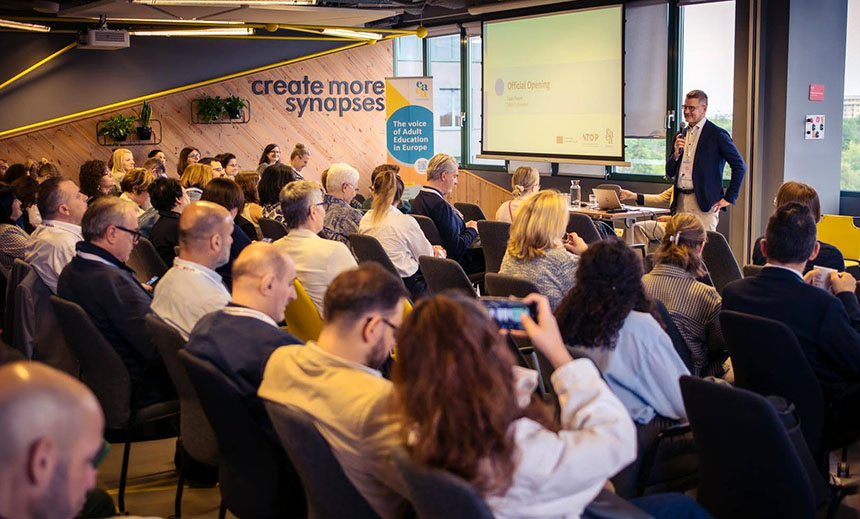
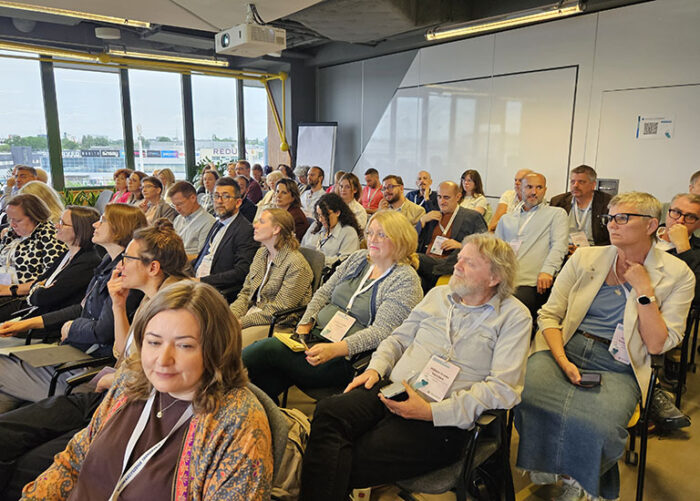
Resilience and community-building were at the heart of the EAEA Annual Conference 2026, which invited practitioners, policymakers, and educators to reflect on how resilience can be built in times of rapid change, uncertainty and crisis in democracy. The event was hosted by EAEA’s member NGO Trainers Association (sTOP) in Warsaw on 10 June 2026, and had more than 100 participants from all over Europe.
The conference emphasised how resilience reaches its peak through relationships, communities, and supportive systems.
From individual responsibility to enabling environments
In her keynote, Professor Alicja Gałązka (University of Silesia) challenged traditional understandings of resilience as an individual trait. Instead, she stressed that resilience develops within social environments and relationships.
Gałązka described resilience as a dynamic process of adapting positively despite adversity, highlighting that it is shaped by context, culture, and access to resources. She also emphasised the importance of social justice:
“We cannot talk about resilience if we don’t take into account inequality, exclusion, and social justice.”
Drawing on the concept of “ordinary magic,” originally developed by Ann Masten, she explained that resilience requires everyday protective factors such as supportive relationships, routines, hope, and a sense of belonging. Social connection is one of the most important elements:
“Supportive communities provide emotional validation and create psychological safety,” Gałązka stressed.
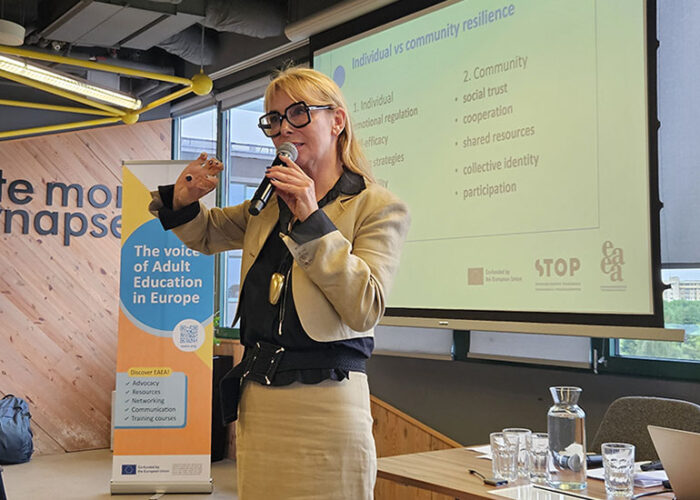
We cannot talk about resilience if we don’t take into account inequality, exclusion, and social justice – Alicja Gałązka
Communities as spaces for dialogue and growth
A recurring message throughout the conference was the importance of creating spaces where people can connect, reflect, and learn together.
Gałązka highlighted that resilient communities are built on authentic contact, inclusion, and shared narratives. They allow individuals to express vulnerability and engage in meaningful dialogue, even in moments of tension.
“The tree survives not because the trunk is hard, but because the roots are alive and connected.”
She also underlined the role of educators in fostering resilience. A resilient educator, she noted, “can tolerate uncertainty, remain emotionally grounded, and take disruption as a resource.”
Resilience requires resources, solidarity, and preparation
The panel discussion brought forward perspectives from different countries, giving examples of how resilience is experienced in contexts of crisis and conflict.
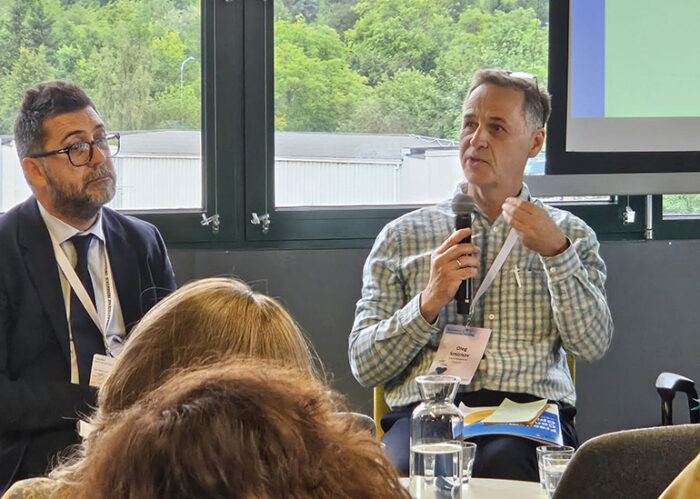
Oleg Smirnov (DVV International Ukraine) reflected on the situation in Ukraine, pointing out that resilience shouldn’t be politically exploited to shift the responsibility of crises and structural changes.
“We should see it as an opportunity to make changes on a systemic level.”
Smirnov also highlighted how communities and adult education centres in Ukraine continue to support people in innovative ways, even in extremely challenging conditions.
Musa Kirkar (CEIPES, Italy) raised a critical perspective on how resilience is often framed. Resilience shouldn’t mean that we ask communities to endure an emergency after emergency.
Adult education is resilience education – Irena Lipowicz
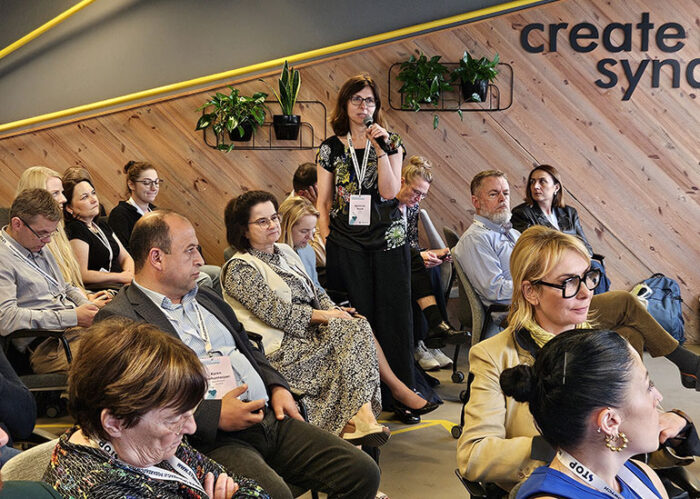
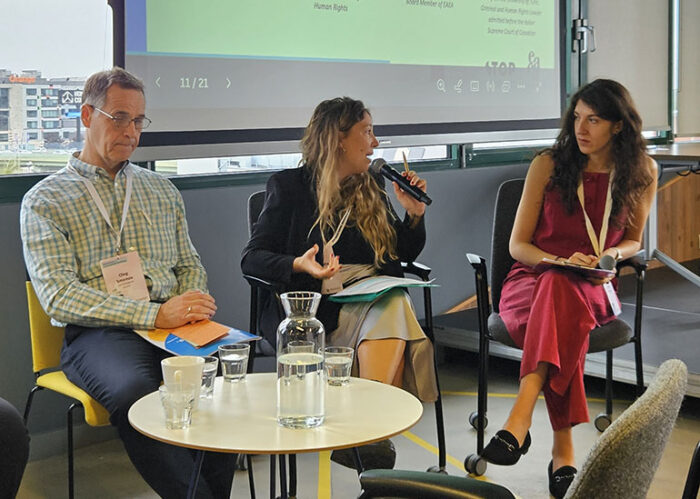
“For me, community resilience means they have enough resources, space to learn, skills, networks and ability act together,” Kirkar said.
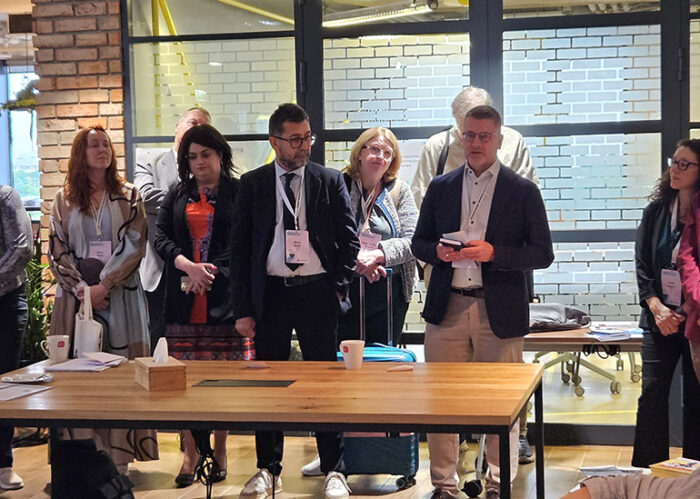
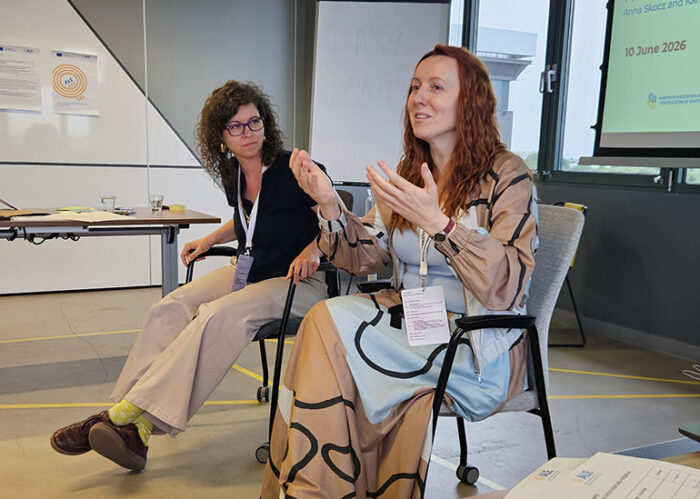
Panel facilitator, EAEA’s Senior EU Public Affairs Coordinator Greta Pelucco invited panelists to discuss the role of resilience in the new geopolitical context.
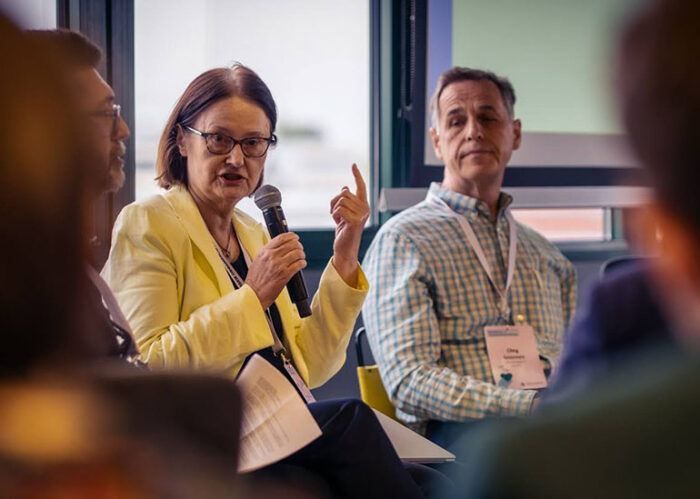
Benedetta Perego (StraLi) and Irena Lipowicz (Cardinal Stefan Wyszyński University), who are both lawyers specialising in human rights, emphasised the role of civil society and adult education in times when formal structures are under pressure.
“When institutions are not working, the responsibility of protecting human rights often falls on small-scale actors in the field,” said Perego. According to Perego, adult education can make communities stronger when institutions are weaker, for example by fostering critical thinking.
Lipowicz underlined the importance of preparedness and solidarity in the current changing geopolitical context: “Don’t wait for the crisis, prepare for the crisis. Don’t wait for resilience, build resilience. Adult education is resilience education,” Lipowicz stated.
Practical examples of strengthening resilience
The conference workshops showcased how adult education contributes to resilience across different fields. They highlighted that:
- quality in adult education is about developing a shared culture and attitude, not only meeting formal requirements;
- inclusive learning environments, including language learning, can strengthen participation and belonging;
- values and well-being are central to organisational resilience;
- adult educators need tools and support to respond to challenges in democratic societies.
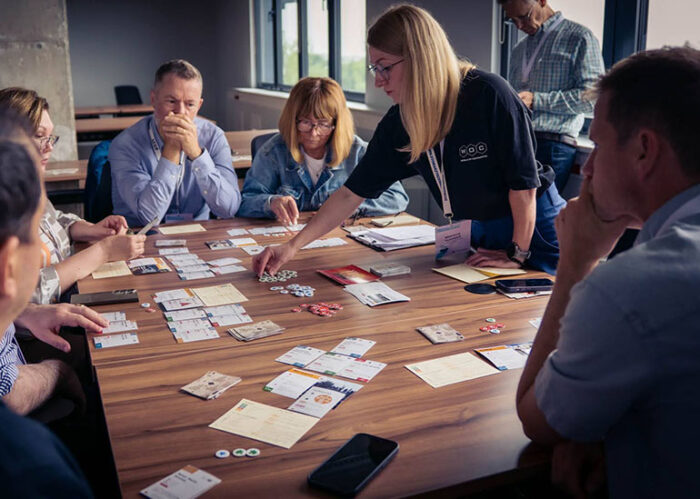
The workshops stressed that adult education helps communities act, especially in difficult contexts. From learning in prisons to storytelling-based activities and simulation games, participants explored how education can support both reflection and collective action.
Building the European adult education community
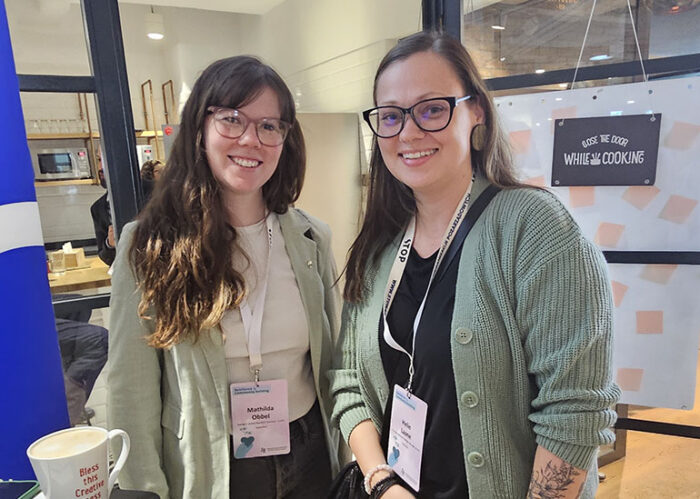
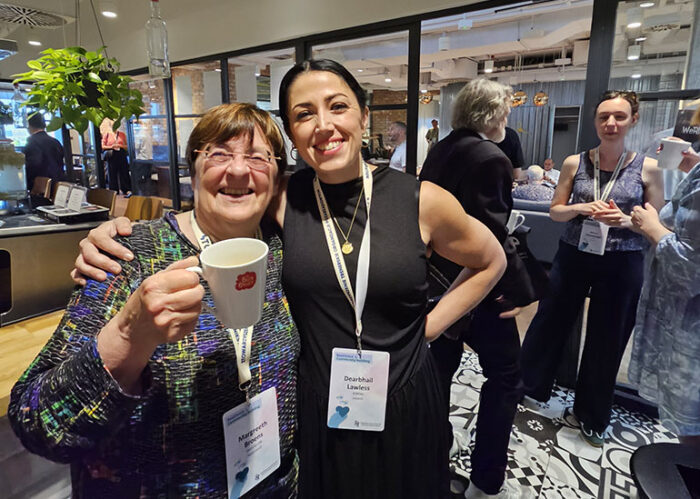
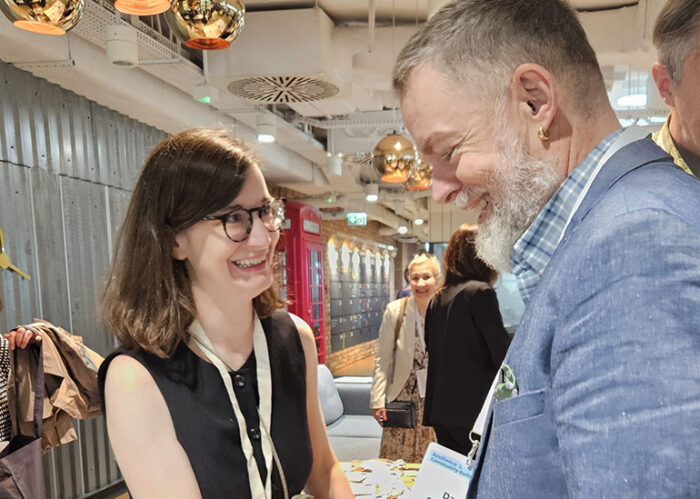
The importance of social networks in building resilience was not only reflected in the official programme, but also in the informal interactions during the conference. For two participants working in adult education in Estonia and Sweden, attending the EAEA events for the first time was a particularly meaningful experience.
“Making new connections is one of my favourite aspects of events like this. After almost every conversation, I had a ‘lightbulb moment’ where I could immediately see opportunities for collaboration,” said Helin Laane from the Association of Estonian Folk High Schools.
Mathilda Obbel, who represented Swedish Teachers’ Union, was curious to know more about folk high schools in Estonia. Over dinner, Laane and Obbel’s discussion moved from work to personal experiences:
“Through our conversation, I got a chance to learn more about our similarities and differences, and the challenges we all face. It also inspired me to see how others respond to those challenges,” said Obbel.
“What I appreciated most, however, were the exchanges that went in a more personal direction, such as ‘What have I done in my life that led me to this EAEA conference?’ These discussions were very inspiring,” said Laane.
These encounters illustrate what “ordinary magic” can look like in practice: interactions that build trust, inspire new ideas, and strengthen the sense of belonging within the European adult learning community. They are all foundations on which resilience is built.
Resilience is a dynamic concept
“Resilience is a dynamic concept, and it needs to be defined in every context,” summarised EAEA’s President Lauri Tuomi in his closing words. He also emphasised that supporting community learning plays a key role in fostering resilience in today’s world.
The conference demonstrated that resilience grows where people come together, learn from one another, and build connections that carry them forward.
***
EAEA’s Annual Events are EAEA General Assembly, Annual Conference and the Grundtvig Award Ceremony. They are open to everyone interested in the latest developments in adult learning and education.
Text: Sari PohjolaPhotos: Michal Kepinski, Sari Pohjola