The 1st of October marks the International Day of Older Persons. This year’s United Nations theme is “Older Persons Driving Local and Global Action: Our Aspirations, Our Well-Being and Our Rights”, enhancing the role of older people in supporting societies to become more resilient and prepared for the future. Here, intergenerational learning policies are crucial.
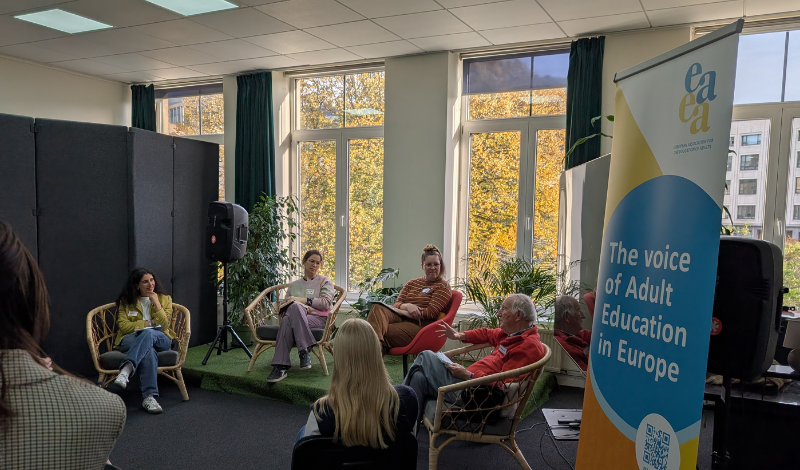
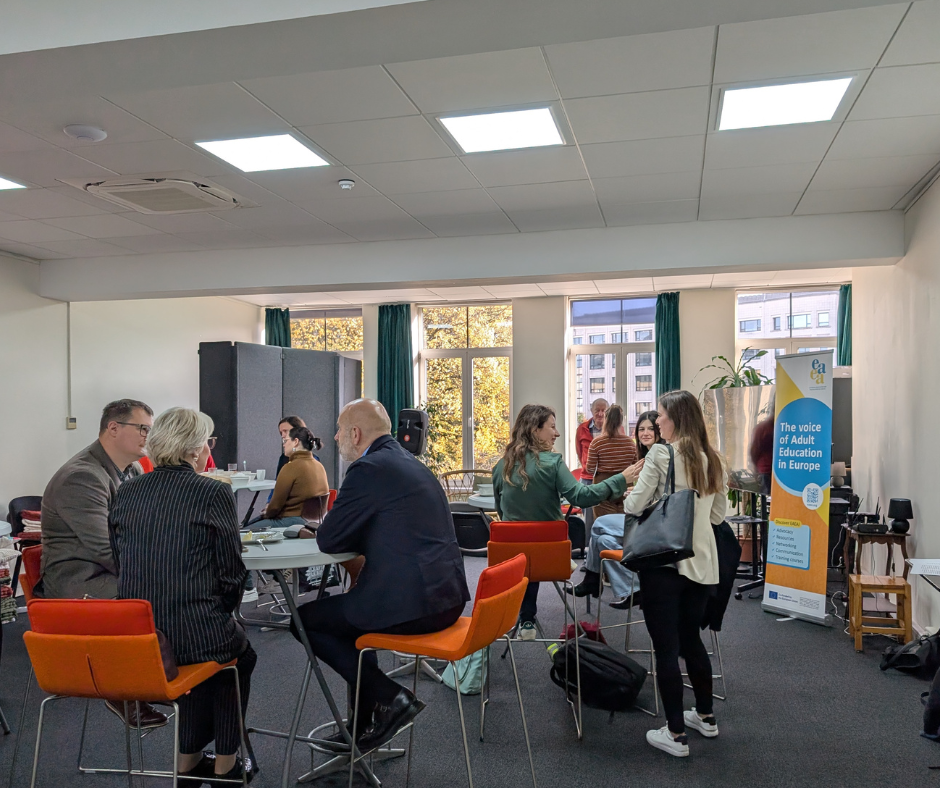
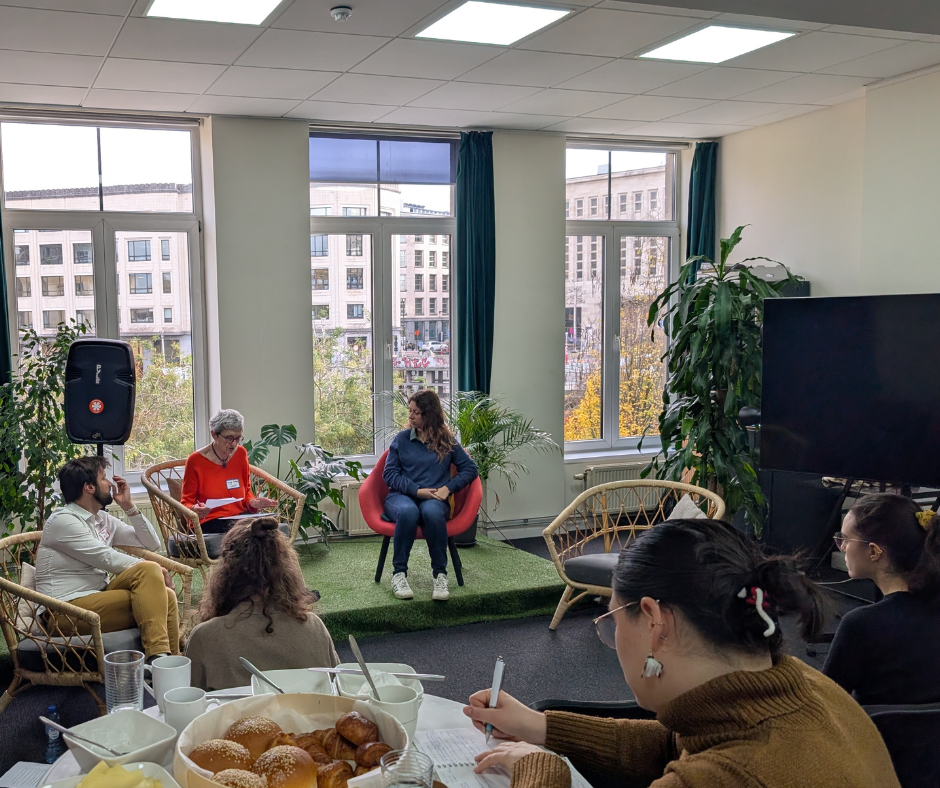
To commemorate this date and on the occasion of the upcoming EU Intergenerational Fairness Strategy, EAEA led a roundtable community discussion on the importance of intergenerational solidarity and how we can better create spaces for dialogue and learning between generations. Professionals working in lifelong learning, social inclusion, active ageing, and labour-market integration gathered on 6 November.
Community discussion on intergenerational learning, active citizenship and dialogue between generations
Participants highlighted various dimensions of intergenerational cooperation, from climate activism with Grands-parents pour le Climat, demonstrating how senior citizens engage in environmental advocacy, to family-based intergenerational learning through COFACE Families‘ perspective and the presentation of educational resources that can be used to acknowledge the vital role of grandparents. The Duo for a Job programme showcased a successful mentorship model of pairing people over 50 with those under 34 and of foreign origin who encounter difficulties on the job market, revealing mutual benefits including renewed purpose for older mentors, growing empathy development and career support for young professionals.
AGE Platform Europe emphasised that age discrimination affects both young and older adults, calling for collaborative approaches to combat ageism and, among other topics, reflecting on the importance of having intergenerational teams in the workplace and community opportunities.
Other contributions included:
- The intergenerational dialogue through volunteering through NASCI‘s support for families
- The importance of spaces which promote intergenerational gatherings for physical activity, where both children/teenagers and older adults become more active together (EuropeActive)
- And a broader perspective on European citizenship through the ECIT Foundation‘s MegaCIT campaign, which reflects on rights, participation and belonging in the European context for all generations.
This event was organised within the framework of the Ageing Well project, and co-funded by the European Union. More information about the project at the end of the article!
 |  |
New Intergenerational Contract
On 4 November, EAEA attended the panel discussion on the New Intergenerational Contract, which brought together key stakeholders to discuss demographic change and intergenerational fairness in Europe. The panel featured representatives of the European Commission, European Parliament, European Economic and Social Committee, civil society and academia.
The discussion highlighted, among other topics, the European Commission’s work on the upcoming EU Intergenerational Fairness Strategy, which aims to promote stronger solidarity between generations. Besides the strategy, an index to assess the impact of policies on different generations and compare parameters across different decades is being developed for better implementation. The panel drew on insights from the discussion paper “A Resilient Future for Europe”.
Still time to contribute! There is an open consultation at the EU level on this upcoming strategy on intergenerational fairness. All practices and feedback are valuable, so consider participating in Have your say: Strategy on intergenerational fairness.
Ageing Well: Science-based habits of people who age well is coming to an end
EAEA has been working for 2 years on a project related to ageing well and active ageing. After the work done to empower and build the capacity of caretakers and educators, the latest tool developed is out – a training programme directly targeting adults 65+! If you want to learn more or if you work with older adults and need inspiration for activities, feel free to visit our new eLearning Platform with 7 modules full of activities!
The platform is self-paced, accessible and features content in 5 languages: English, French, Spanish, Greek and Czech.
Visit the Ageing Well eLearning Platform!
Read more on the references of this article at:
- United Nations – International Day of Older Persons (updated every year)
- European Commission – Intergenerational Fairness strategy (constantly updated with the new information on the upcoming EU strategy)
- A Resilient Future of Europe – Strengthening families, work and pensions in the face of demographic change (The FutuRes project, 2025)
Text: Maria Gonçalves RibeiroPhotos: EAEA