
On December the 3rd 2024, EAEA attended a seminar organised by Lire et Ecrire – the organisation advocating for and working to combat illiteracy in French-speaking Belgium. The theme “equipping ourselves with literacy to better act in a digitalised world” was highlighted throughout the day, with an emphasis on inclusive AI trends and critical awareness of the impacts of AI and digital tools for those lacking basic literacy skills.
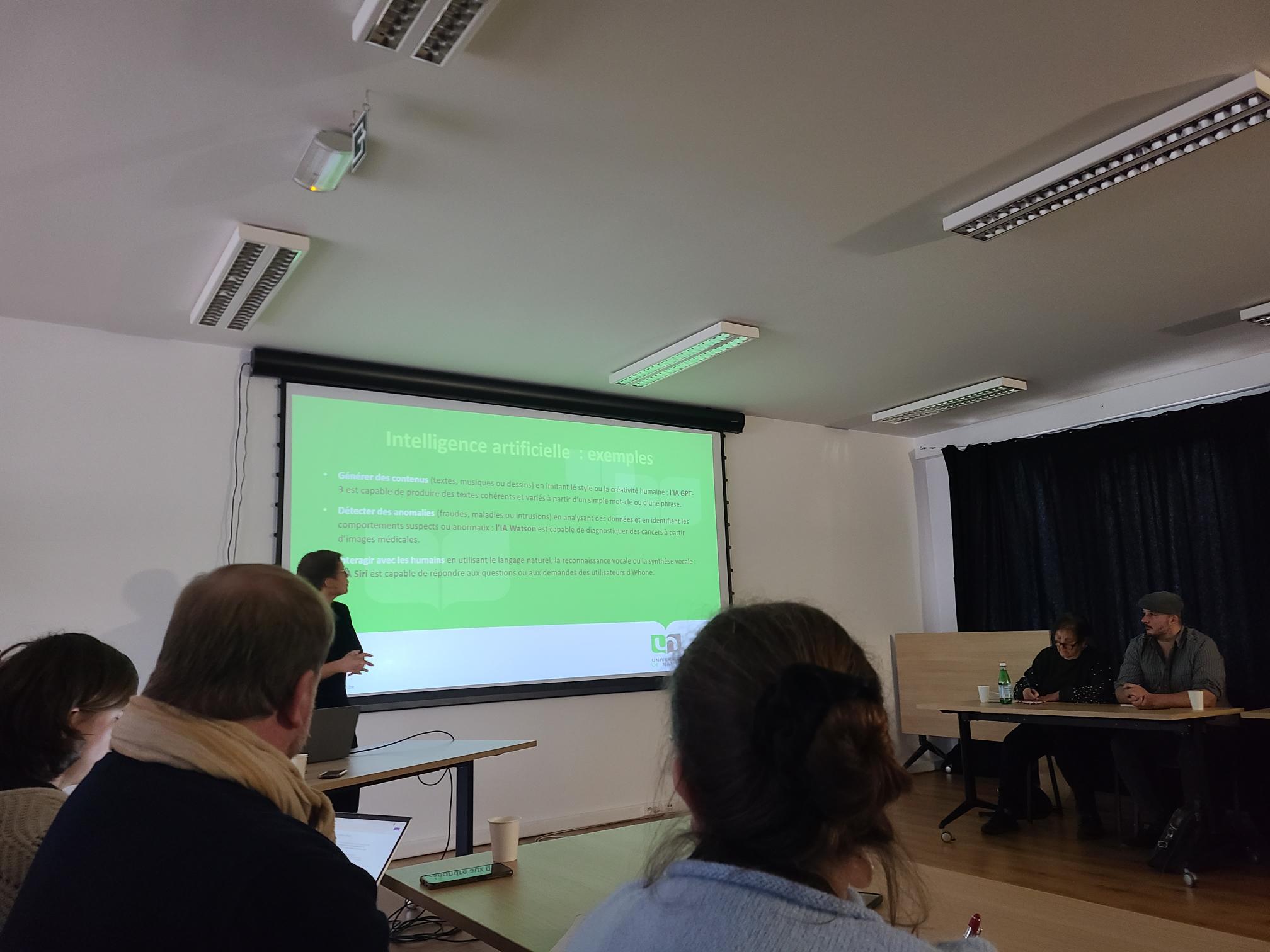
In the morning session, participants heard from Olga Thiry and Julie Mont, two assistants at the Faculty of Law at the University of Namur. They presented an overview of AI and differentiated it from algorithms, highlighting the fact that “AI, unlike simple algorithms, can do acts that are normally attributed to humans, such as creating, analysing and taking decisions”. Along this vein, algorithms are a tool to nourish AI, which in turn relies on massive sources of data.
“The best way to protect ourselves from the risks of AI is to fully engage in GDPR and be careful with what data you share”
With regards to the risks of AI, the researchers proposed:
- AI’s strong bias: depending on the data that is used to feed it, AI can show strong bias. Moreover, the type of data given to AI can reflect depends on the data the bias of our society, and so it is even harder to identify this.
- Misinformation: false information created by AI might can be used to cause harm to public opinion.
- Dehumanisation of processes: replacement of humans in decision-making roles, such as in “Cyber Courts”
- Environmental impact: machine-learning tools require large amounts of energy to run and to process data, leading to large energy consumption.
To combat these risks, individuals should consider if they need to use AI and how they feel about a society with more AI, but also make sure the tools they use comply with the general data protection regulation (GDPR). “The best way to protect ourselves from the risks of AI is to fully engage in GDPR and be careful with what data you share,” stated Olga Thiry. However, finding the privacy policy and understanding the use of tracking, cookies and data protection on AI is not always easy. For the widely-used ChatGPT tool, for example, until recently, information on storing and deleting personal data was only available in English. On other sites, privacy policies are often long, use jargon, are written in upper-case and are generally hard to read and digest, causing users to consent without fully understanding.
Bringing literacy into the digital world at Lire et Ecrire
Recognising the importance of literacy skills in the post-COVID-19 digitalised learning world, Lire et Ecrire are developing an online “Digital Literacy Box” adapted specifically for their learners. Such technological adaptations include simple language, text-to-speech features, clear colour coding and other visual clues to understand the context. The software, developed by Occupy The Tech Brussels, should be released in 2025. Moreover, Élodie Cailliau, Head of Educational Support at Lire et Écrire presented the organisation’s Digital Skills Reference Framework (FR) which was published in May 2024. The Framework outlines the basic content in information and communication technologies (ICT) to be integrated into training programmes by clearly situating the place to be reserved for them in popular literacy: i.e. a tool to achieve learners’ objectives, promote people’s autonomy and highlight the impacts of their use (in terms of security, environment, privacy, etc.)
Text: Charlotte Ede