
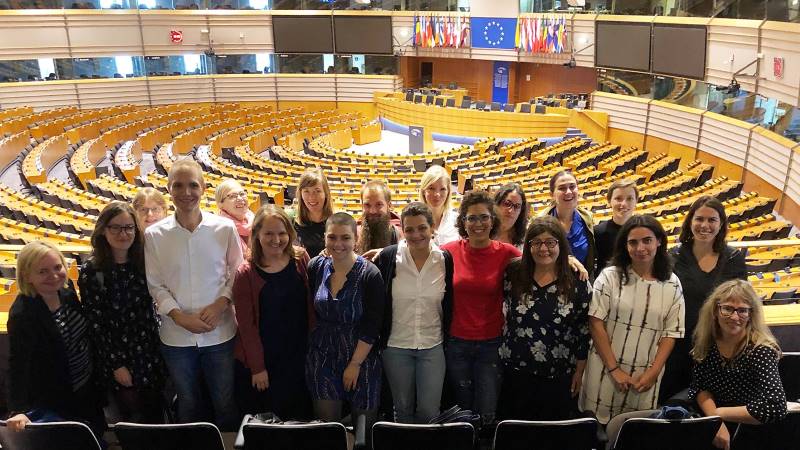
The EAEA Younger Staff Training (YST) has been taking place annually since 2011, welcoming adult learning professionals with relatively little experience in the field. Every year, the participants get introduced to key EU policy initiatives in adult learning and education and exchange ideas on how they can improve their advocacy work to strengthen the field. Topical issues, such as outreach to new learners or life skills, are also discussed, suggesting new approaches that can be incorporated in every day work.
In 2021, the training will have a special focus on digitalization, providing a space for reflection on how adult learning organisations have been coping with digitalization as a challenge, made all the more urgent because of the COVID-19 pandemic. Results of EAEA’s project FutureLabAE, which introduce the concept of change-oriented adult education, will offer both the methodology and the theoretical background, inviting the participants to think outside the box.
A key element of the YST is that of peer-learning and networking. During daily “adult education in my country” sessions, participants get to compare their working contexts, discuss common challenges or opportunities and get inspiration for their practice. To make sure that the exchange is as rich as possible, and that the training is accessible to everyone, for the first time in 2021 the YST will offer some of the sessions virtually.
Registrations to the YST are open between 12 May and 26 August (extended deadline). More information about the training, including its programme and frequently asked questions, is available on the training website.
In the words of the participants
 “I would recommend this training to those interested in developing projects and activities in the field of adult education. The combination between activities in the field and study visits was really interesting. We also had a chance to learn how to develop new projects and funding opportunities at the European level and meet new partners to develop future cooperation at EU level. I would say that it was a really good activity for different profiles, for example if you are a teacher or a project manager, you will find new things to learn in each part of the training course.”
– Natalia, from Spain, ASPAYM CyL , YST 2019

“The Younger Staff Training is really exceptional because you can share your experiences with a lot of other people working in the field from all around Europe. The trainers give you amazing ideas for writing projects and creating advocacy campaigns. I can highly recommend the training because it gives you inspirations that you cannot find anywhere else. Everybody working in adult learning should participate in the Younger Staff Training at least once!”
– Avto, from Georgia, DVV International Georgia, YST 2018