
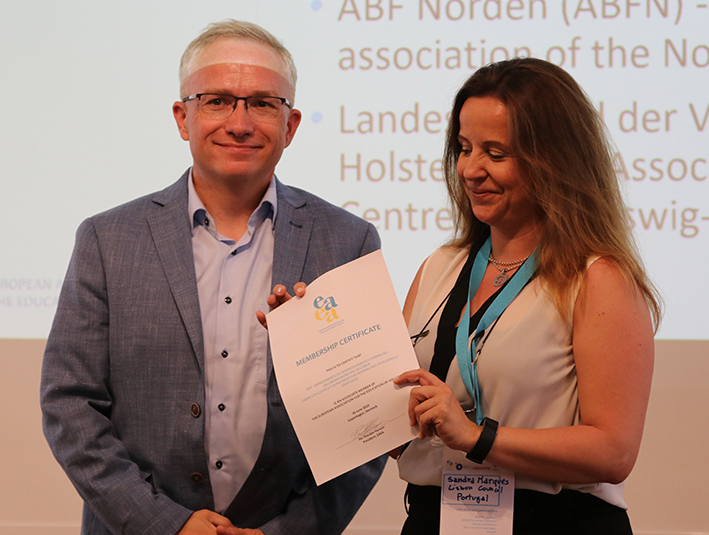
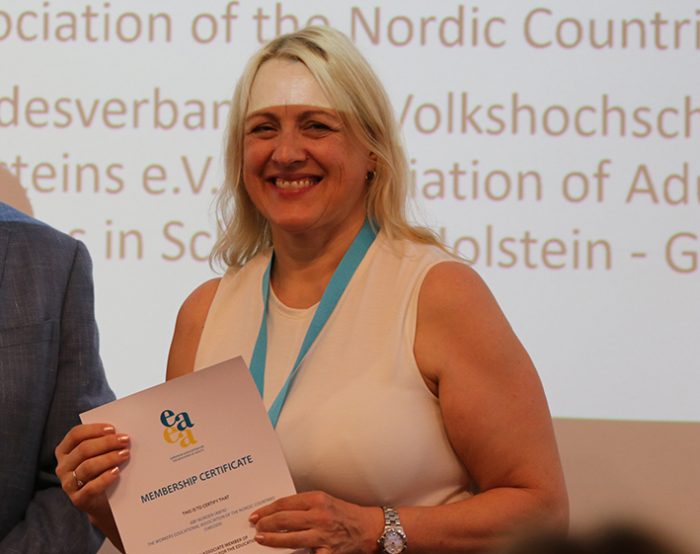
Mia Andersson Wikholm, ABF Norden
ABF Norden (The Workers educational association of the Nordic Countries, ABFN) represents several member organizations in the Nordic Countries, each having a long history in liberal adult education within the labour movement: ABF Sweden, AOF Denmark, AOF Norway, TSL Finland, ABF Åland and ASì Island.
The two flagships activities of ABFN are educational programs The Geneva School and The Nordic School. The Geneva School is aimed at active members of trade unions, and it works towards a better understanding of international co-operation, focusing on the work of the International Labour Organisation (ILO). The Nordic School is a course about the possibilities and challenges of the Nordic model.
The Viennese Adult Education Center Ltd (VHS Wien) has 130 years of tradition in Viennese adult education. VHS is an important part of the city of Vienna, its history, culture and educational landscape. The educations centres provide around 13,500 courses and 30,000 educational counselling sessions per year. VHS takes part in several international projects and is also involved in FuturelabAE-project together with EAEA, developing change-oriented adult education in the fields of democracy and digitalisation.
Association of Adult Education Centres in Schleswig-Holstein (The Landesverband der Volkshochschulen Schleswig-Holsteins e.V.) represents 140 adult education centres in Northern Germany, with a headquarters in Kiel. The association provides support services to it’s members and helps them to deliver quality-assured adult education. The association takes part in several national and international projects, and seeks to further develop their international co-operation, offering their staff opportunities to learn from colleagues in Europe.
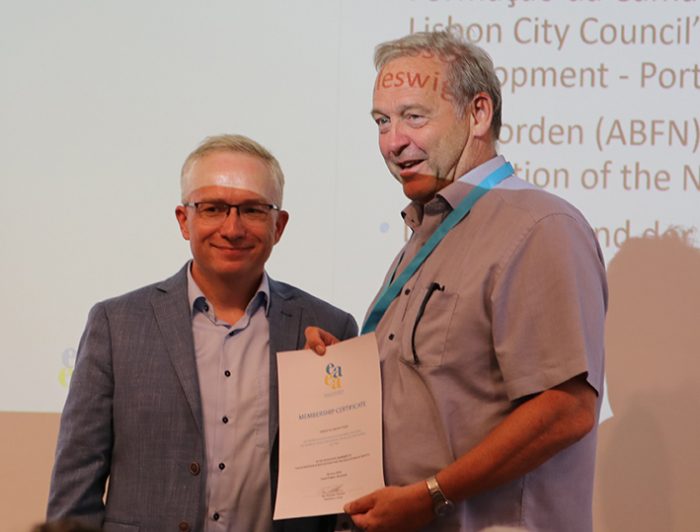
Jean Marie Thill, VHS Vienna
Lisbon City Council’s Department for Training and Development (Departamento de Desenvolvimento e Formação da Câmara Municipal de Lisboa – DDF) has a mission to transform Lisbon into a city of Learning by leveraging knowledge, developing skills, addressing the digital divide and creating opportunities for success for all its citizens. DDF offers training in a wide variety of subjects, for example architecture, engineering, finance, languages, transport, gardening and social work. DDF is a member in several international networks and has took part in international projects as well.
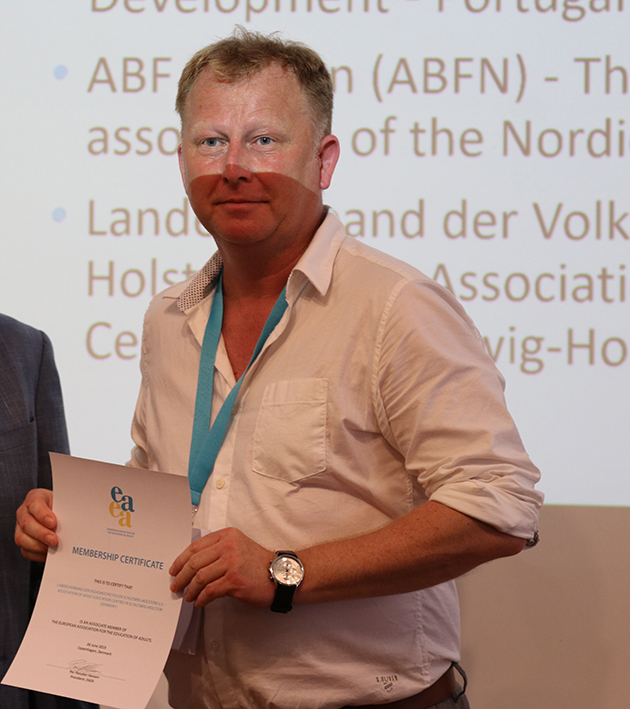
Michael Kölln, VHS Schleswig-HolsteinSandra Marques, Lisbon City Council’s Department for Training and Development