
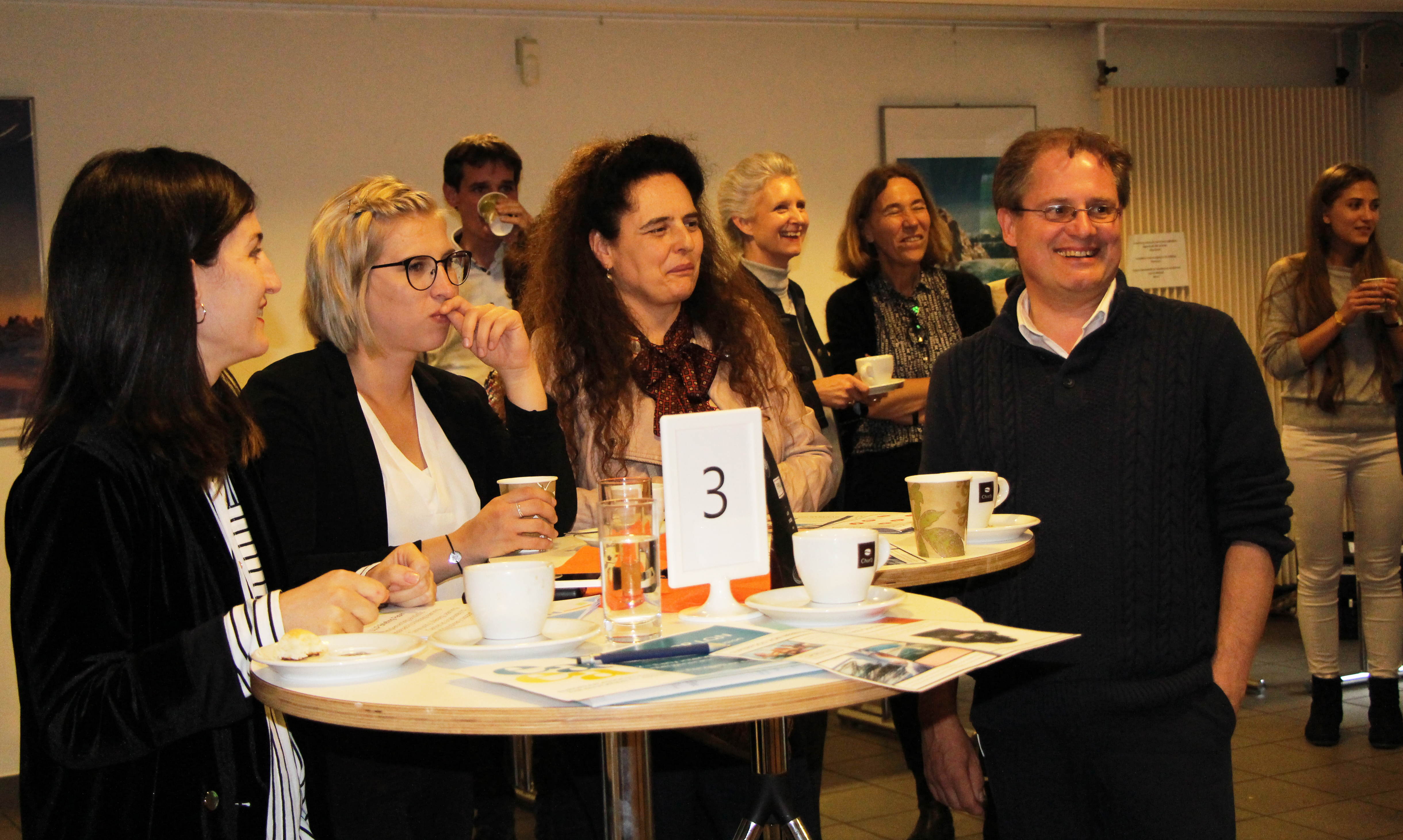
On the 28th of May the workshop “Local development through citizens’ empowerment” took place in Brussels as final event of the LQN project (LebensQualität durch Nähe – Quality of life through proximity)
LQN-project was carried out by five adult education institutions and EAEA in Austria, Germany and Italy. During the three years of implementation, the project developed an innovative training process which was addressed at municipalities especially in rural areas. The aim of the trainings was to empower the citizens and get them involved in participatory projects to tackle civic and social challenges.
In addition to presenting the results of the project, the workshop was a chance to discuss how community development can offer opportunities that unfold the potential of individuals, allowing them to be active citizens and contribute to a sustainable improvement of the quality of life.
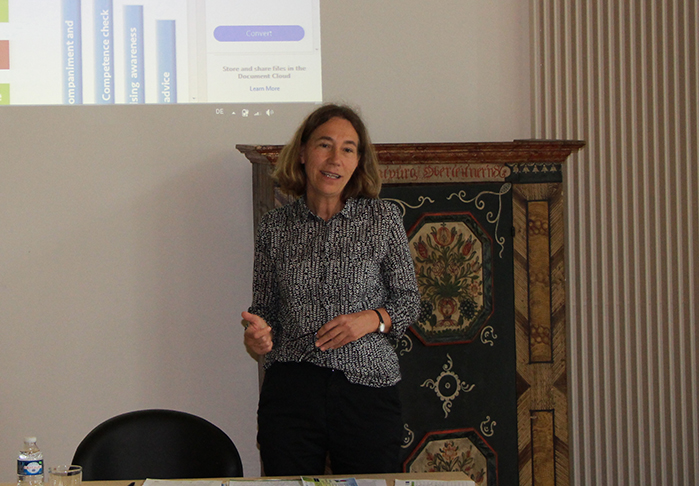
Elisabeth Kumpl-Frommel from SPES GmbH
Partners of the project consortium, SPES GmbH (Austria), SPES e.V. and K Punkt (Germany), Bildungshaus Schloss Goldrain and Bildungshaus Kloster Neustift (Italy) shared their experiences in the implementation of the process and the impact it had in their municipalities.
The discussion was enriched by presentations of Irene Bertana from COFACE Family Europe and Noelia Cantero from EARLALL. Bertana talked about the role of education in building inclusive societies, giving particular importance to challenges related to migration. Cantero highlighted the importance of the regional and local environment for successful lifelong learning strategies.
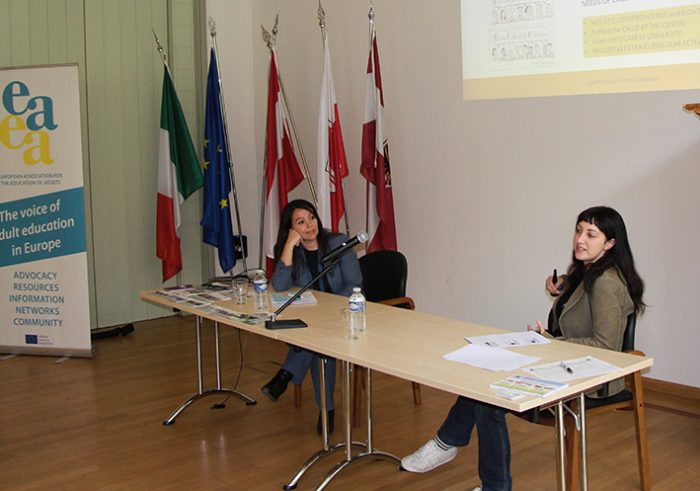
(From left:) Noelia Cantero from EARLALL and Irene Bertana from COFACE Family Europe.
The event was kindly hosted by the Common Representation of the European Region Tyrol – South Tyrol – Trentino.
Watch the video to learn more about the LQN-project!
Text: Silvia TursiPhotos: EAEA