
What are life skills? They are a constituent part of capabilities for life and work in a particular social, cultural and environmental context. The types of life skills emerge as a response to the needs of the individual in real life situations. Life skills are closely related to key challenges adults face in the modern life such as taking care of health, managing finances etc. They are combinations of capabilities that enable adults to live independent lives.
 ‘Life skills put the learner and his or her needs at the centre and provide relevant and important learning opportunities. We no longer fit the learner into a curriculum but the curriculum is structured around the person,’ says Gina Ebner, Secretary General of the EAEA.
The Awareness Raising and Strategy toolkit provides summaries of the lessons learnt through the lifespan of the LSE project and contains concrete recommendations and proposals for life skills strategies at different levels. It also awareness of the difficulties that many adults face when it comes to poor life skills.
The toolkit includes:
- An introduction to the concept of life skills and its benefits
- Good practice and tools examples
- Recommendations for adult education providers
- Recommendations for policy makers
- Recommendations for stakeholder organisations working in life skills areas
- Learners’ stories
- Proposals for life skills strategies on local, regional and national levels

The toolkit will soon be available in Danish, Greek, Slovenian and French.
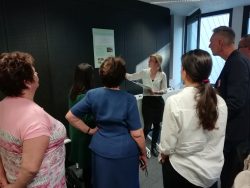
The Awareness Raising and Strategy toolkit was presented at the LSE final conference “Transforming lives, society and adult education through life skills”, which took place in Brussels on the 16th of October 2018. More than 30 practitioners and policy-makers got together to discuss the Life Skills Approach. Find out more by reading the conference report.
For further information, please contact the European Association for the Education of Adults:
Gina Ebner, Secretary General
gina.ebner[at]eaea.org
+32 (0)2 893 25 24