
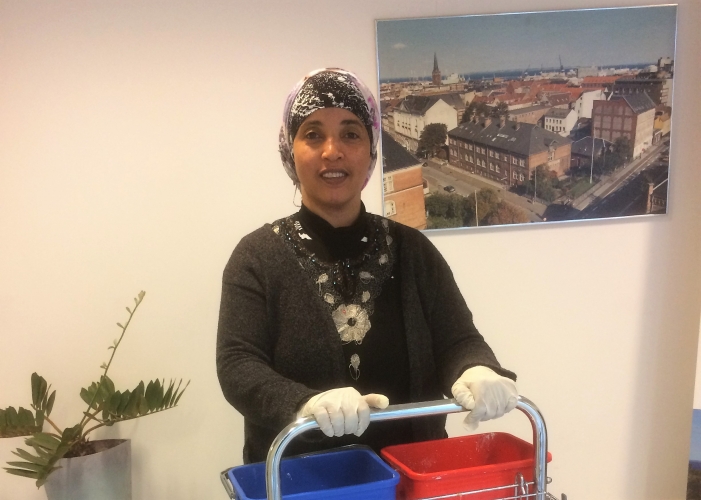
”Become a housekeeper” is a practical course with the aim of making foreign citizens able to work primarily in the hotel business and making sure theyare able to stay employed.
Focusing on foreign citizens that due to language, social or other limitations find it difficult to find their space in the labour market, the “Become a housekeeper” project prepares the participants to get a realistic sense of the demands made on them as employees. The project is also aimed at refugees and participants on reduced social benefits.
Practical course for the needs of the participants
A specific method has been created so that the courses are adapted to the needs of the participants. Thus, work and instructions are interchanged 25 hours a week. The course is taught in English and Danish with the added aid of illustrations.
During the whole course, the participants have three hours of practical cleaning a day. Finally, after a period of internships , participants start working for the companies.
“Become a housekeeper” enabled students to gain stability, and a better understanding of norms when being at a place of work. The project has been running since December 2016, and so far several participants have been employed.
The project: Become a housekeeper
Award category: National projects (Denmark)
Learner target group: Foreign citizens
Innovative practice: Practical training course to ensure employment
Project coordinator
- Orgnisation: Fora
- Contact: John Lauridsen
The article series shares good practices on engaging new learners by introducing the nominees of the EAEA Grundtvig Award 2017.
Text: Lou-Andréa PinsonPhotos: Become a housekeeper project