
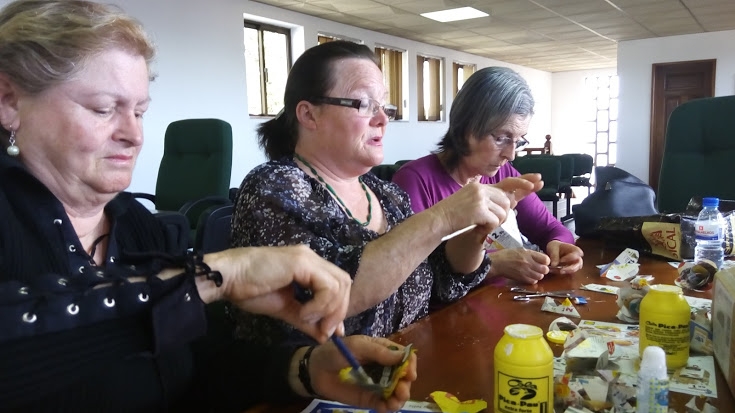
The initiative has been engaging into learning mainly people who usually don’t have so many chances for participating. The reasons for not participating in education vary, it can be either because opportunities lack in rural areas, or because the more you are “out of the wheel”, the more you tend to be excluded.
According to Maria Conceição Pinto Antunes , the coordinator of the project, Workshop 55 is aimed at adults over 55 years old who are retired, in early retirement or unemployed.
“To people who are still autonomous and that can turn their free time into learning opportunities that enhance the acquisition of personal and social skills that lead them to greater integration and community participation”.
The main objectives of the project are to raise awareness, educate, train and inform throughout adult life and promote an active aging, stating that education is not only for the youngest. Using an active participation of the participants in its development process, the project has a set of activities of an educational, informative or formative nature. These include, for example, health promotion, ICT, artistic expression or gardening and activities of socio-cultural and recreational nature, such as discussion of current themes, discovery and reactivation of traditions or visits and walks.
By awakening interest in leisure activities through personal and socio-community development activities that promote new learning, well-being and user-friendliness, the project tries to foster a process of personal and collective development for people with low levels of schooling who otherwise would not have the opportunity to continue their personal enrichment.
Overcoming the obstacles
The main challenge of this project was to motivate the learners.
“A lot of them have internalized the idea that they do not know anything since they have very low school levels and that, as adults, they are no longer able to learn,” says Maria Conceição Pinto Antunes.
Once this first stage of fear has been passed, they reveal themselves as extremely interested, participative and aware of the importance of the learning processes. In the end, the workshops have been so successful that they continue to function after the trial period, as participants require their continuity.
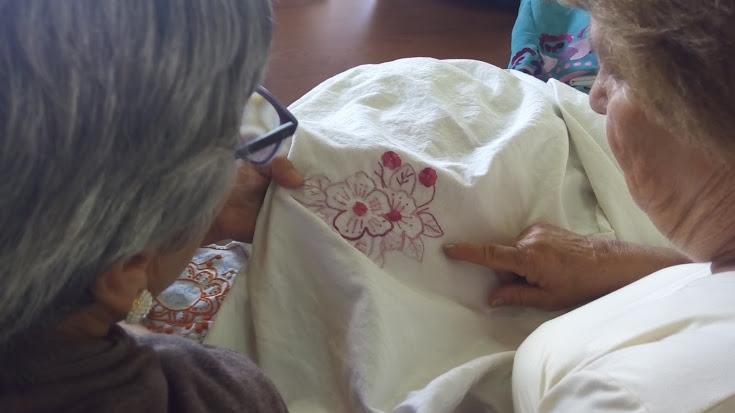
Their success is also evidenced by the fact that these workshops have been replicated in various locations and by the speeding up of partnerships that promote joint activities and events between the various institutions of the communities and even between several communities.
“This project clearly confirms that adult education is a really powerful instrument in the empowerment and emancipation of adults and it is the key indicator in the possibility of transforming living conditions,” stated Maria Conceição Pinto Antunes .
The project: Promotion and sustainability for older adults’ education workshop 55 – Portugal
- Award category: National projects (Portugal)
- Learner target group: Elderly
- Innovative practice: Using adult education as an instrument in empowerment and emancipation of adults with lot of free time.
Project coordinator:
- Organisation: Instituto de Educação – Campus de Gualtar
- Contact: Maria Conceição Pinto Antunes
The article series shares good practices on engaging new learners by introducing the nominees of the EAEA Grundtvig Award 2017.
Text: Lou-Andréa PinsonPhotos: Workshop 55