
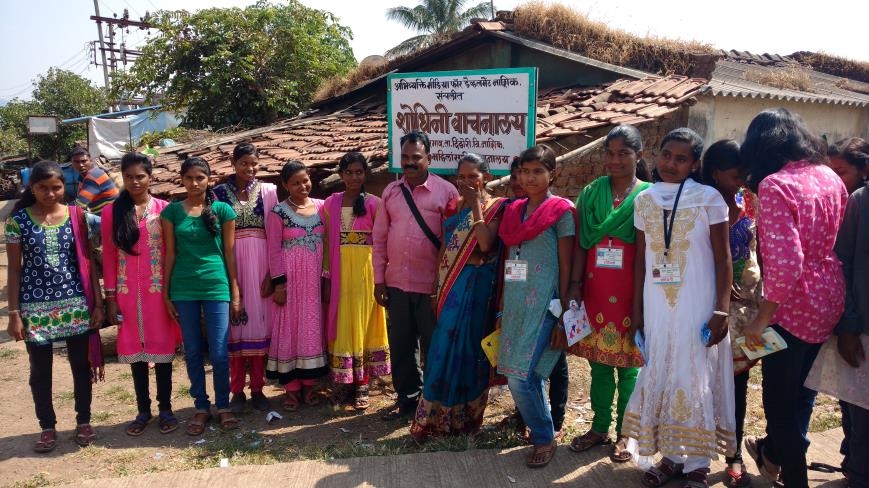
Building the capacities of these girls, aged between 14 and 24 years old, in research, analysis, gender and leadership is the aim of the programme. In these areas, there is a need to deepen the understanding of learning barriers of adolescent rural girls to seek more effective strategies and tools to address their demands for learning.
“We chose the adolescent girls in rural areas as a target group because they are the most vulnerable group who face a series of challenges growing up,” Nitin M. Paranjape explains.
So far, the effect of the workshops created by the project has been significant on the young girls. Their awareness of themselves and their right to live a life of dignity has greatly increased. They now talk with confidence not only amongst themselves but also within their families and communities to postpone the imminent marriage and to continue studying. The girls, who are known as Shodhini’s (seekers) also led a research project.
They began by recognising the roles and contribution of young girls in their community as well as collecting data for a report of girl education in these areas. The girls will then be consulted on provision of literacy and basic skills education programme targeting young women from vulnerable backgrounds.
Finally, a small library in all the villages exclusively for women and girls to deepen the culture of reading was created in their villages. They are also considering to set up a community learning centre to enable the more regular meeting place and a space for exchange of ideas for the girls and women.
“There is a need for such a centre which will ground the village-life with possibilities of a good future. The centre will raise hope and restore the dignity of the people in the village and provide services locally.”
Even though the project still faces many challenges, including the difficulty to convince communities to see the potential of girls, many girls had the opportunity to acquire functional literacy skills and pursue lifelong learning.
The project: Abhivyakti Media for Development project
- Award category: International projects (India)
- Learner target group: Adolescent girls
- Innovative practice: Library as a meeting place for the target group, a community centre planned
Coordinator:
- Organisation: Abhivyakti Media for Development
- Contact: Nitin M. Paranjape
Resources:
The article series shares good practices on engaging new learners by introducing the nominees of the EAEA Grundtvig Award 2017.
Text: Lou-Andréa PinsonPhotos: Abhivyakti Media for Development project