
22.09.2016

The FORINER project is looking for partners for cooperation in prison education

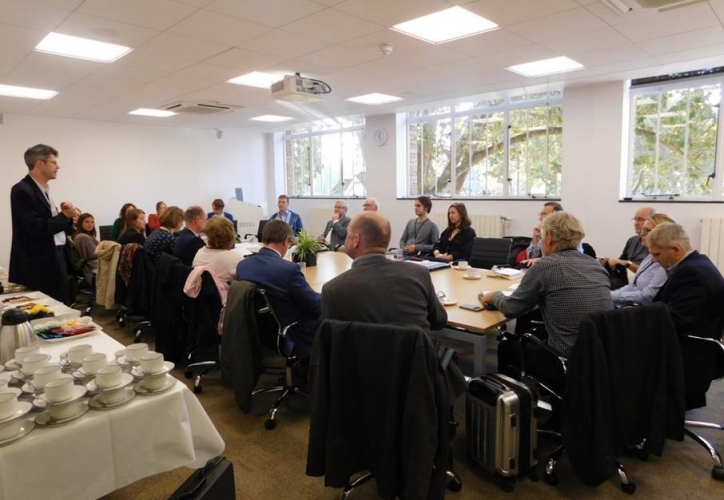
The FORINER project aims to provide foreign national inmates in EU prisons with access to education provided by their home institutions. The project team is now looking for European organisations involved in distance education or prison education that are interested in becoming pilot partners.

In European prisons, foreign inmates often don’t have access to education, even though they have the right to. In order to tackle this issue, the FORINER project aims to give foreign national inmates in EU prisons access to education provided by their home institutions. This project focuses particularly on finding digital and non-digital ways of providing access for foreign inmates to education.

For this purpose, the FORINER partners will be piloting test cases on distance education for foreign national inmates all over Europe. In each pilot, at least one inmate will be given access to education from their home country. More information about the pilots are given in the “Pilot information sheet”.

The FORINER project is now looking for European partners involved in distance education or prison education, that are interested in being involved in a pilot. All interested persons are invited to complete the “Pilot partner information form” and send it to the FORINER team via email as soon as possible.

For further information, here are FORINER contact details: foriner@vocvo.be (email), +32 (0) 486 69 88 49 (phone) or foriner.project (Skype).

Text: Clémence GarnierPhotos: FORINER

18.06.2026 digitalisation

The transformative power of education in closed environments

Education is a fundamental right. But for people living in prisons, detention centres, and other closed environments, that right often remains out of reach. At the EAEA Annual Conference in Warsaw, a workshop brought together adult education practitioners to explore what it takes to make education (including digital education) a reality behind closed doors and how ALE can contribute actively to systemic change.

18.06.2026 digitalisation

Competence development with the help of technology: practical examples for educators

While the benefits of emerging technologies in adult education have already been recognised, educators still lack support to effectively integrate them in (non-)formal education contexts. Within the ETHLAE project, we have made a toolbox consisting of five learning areas with each two learning scenarios available to help educators in providing learner-centred support to adults in vulnerable situations.

16.06.2026 EAEA General Assembly

Welcome new members!

EAEA welcomed eight new members at the General Assembly on the 9th of June in Warsaw, Poland. The new members come from Kosovo, Ukraine, Malta, Ireland, Portugal, and Bulgaria.