
The three portrayed documents, ‘Manifesto for Adult Learning in the 21st Century’, EAEA Policy Paper on Health and EAEA Grundtvig Award 2015, aim at policy-makers to present how adult education can play a key role to bring solutions to the challenges Europe is currently facing.
“We need a European agenda with a strong focus on adult education and skills, where adult education is not just about skills for the labour market but is about skills for life. In the light of recent tragic events, we need adult education to live together in inclusive societies,” underlined EAEA President Per Paludan Hansen, presenting the Manifesto.
Lifelong learning to defeat poverty
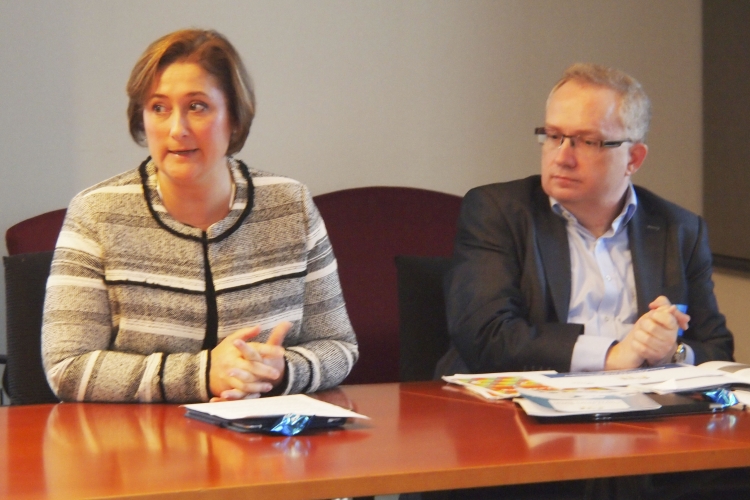
MEP Therese Comodini Cachia, member of the Interest Group on Lifelong Learning initiated by EAEA and Lifelong Learning Platform, referred to a recent Draft Joint Employment Report published by the European Commission which outlined an increase of poverty in Europe. She emphasised that it is imperative for policy makers to do their very utmost to understand the needs and social environment that these people live in.
“We need to devise lifelong learning measures that address their needs. If we fail to do this we would be guilty of increasing differences in society, poverty as well as marginalisation,” she said.
EAEA would like to thank Ms. Comodini Cachia for hosting the Policy Lunch and for her active participation in the debate that pursued the common purpose of raising awareness on adult learning and putting forward the need to introduce a holistic approach at all levels of decision-making.
Text: Inna KravchokPhotos: Karl Agius, Raffaela Kihrer