
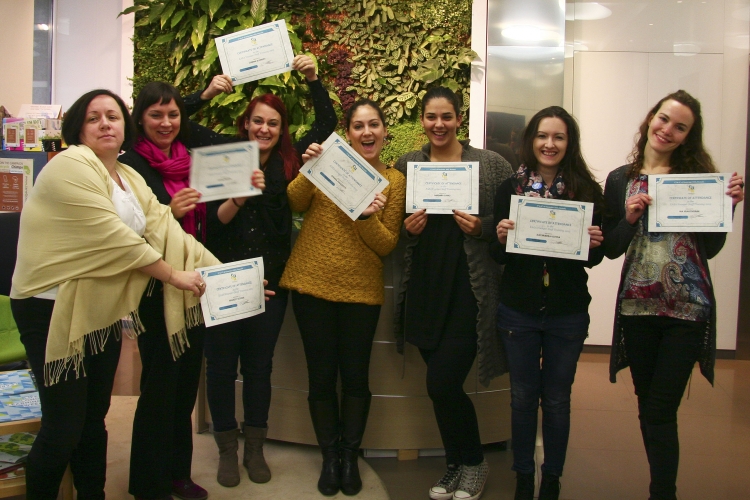
During the four training days, the participants of the EAEA Younger Staff Training 2015 were offered a number of meetings and presentations to attain a better understanding of the European decision-making procedures, as well as the civil society’s response at the European level.
Getting a common perspective of adult learning Europe-wide
During one of the training sessions, the participants had the opportunity to exchange their expertise on the state of adult education in their countries.
“I do believe that strengthening the network of adult education providers in my country as such can benefit the European system as a whole and that’s hardly possible without an image of the system that our neighbors have developed,” one of the participants underlined.
Learning the European adult education policy
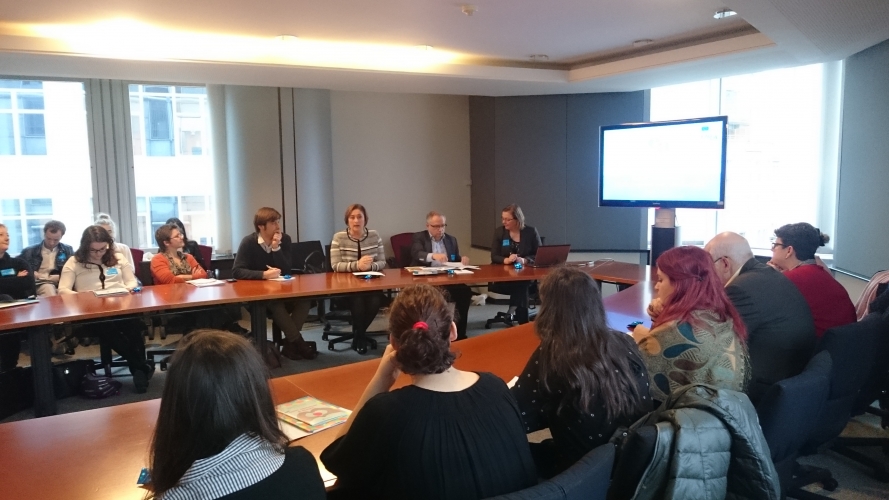
As an introduction into the policy work of the European civil society, the participants were familiarized with the advocacy and lobbying work of not only EAEA, but also the Lifelong Learning Platform (LLL-P), an umbrella organisation for the European networks active in the field of education and training.
To make this session more practice-oriented the participants were invited to the EAEA Policy Lunch at the European Parliament, where the EAEA policy paper on health and the Manifesto on Adult Learning in the 21st Century were presented.
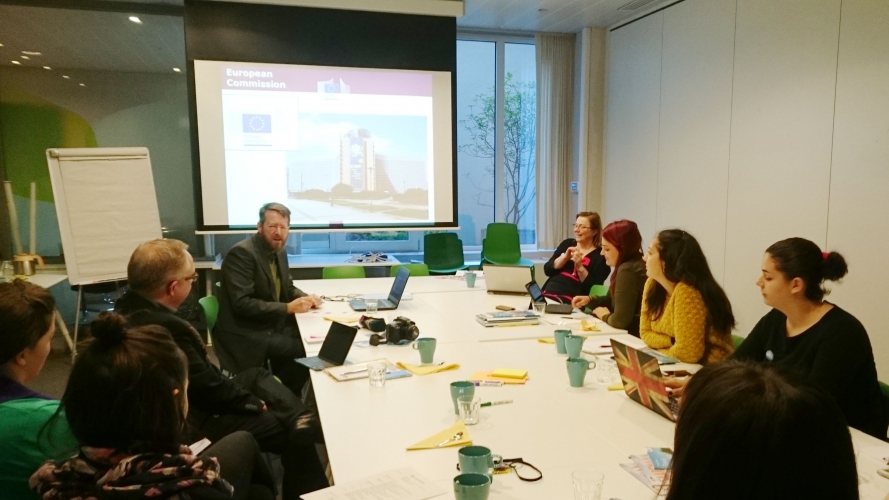
During a meeting with Mr. Paul Holdsworth representing the Unit for Adult Education at the European Commission, the younger staff learned more about the structure of the European institutions and EU policy processes in education and training.
A true European community
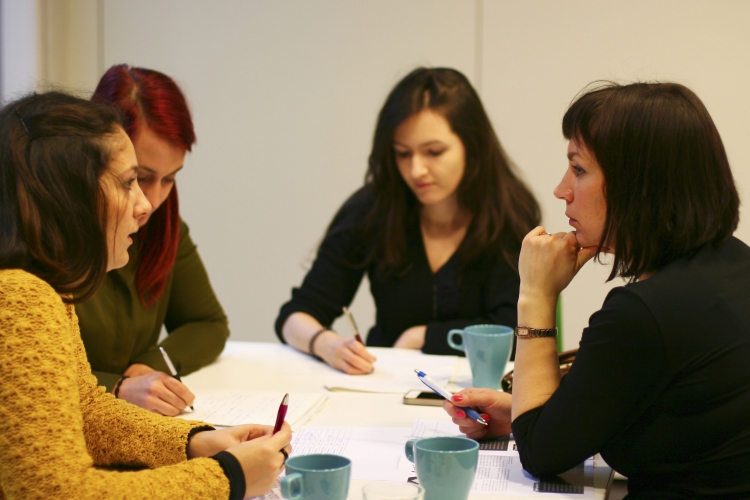
Non-formal communication was also part of the training during the joint lunches and dinners, when the participants shared their own experiences as adult education practitioners in their countries.
“I deeply believe that learning and personal development gives meaning to life and I have a great job of offering opportunities for lifelong learning,” one of the participants said.
As the training ended, the younger staff expressed willingness to stay in touch.
“Let’s continue networking, stay connected and be supportive!” said one participant.
Text: Inna KravchonokPhotos: Raffaela Kihrer