
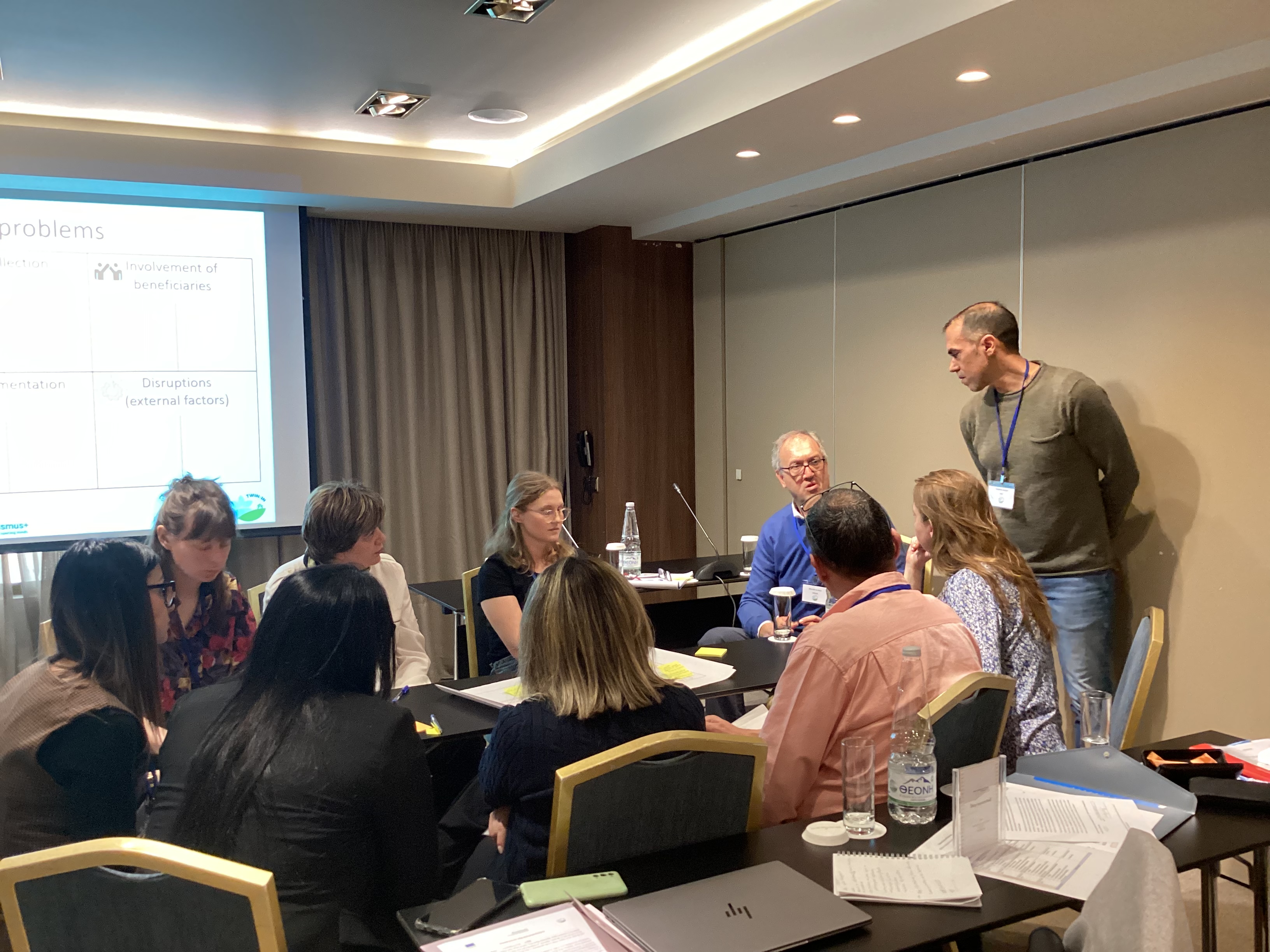
On 10-11 March, EAEA joined the kick off meeting of the new TWIN-IN Erasmus+ project – Promoting Responsible TWIN Transitions in European agrifood systems through innovation and learning alliances. The meeting took place in Thessaloniki, Greece, hosted by the Aristotle University of Thessaloniki, the project coordinator.
The ambitious three-year Alliance for Innovation Key Action 2 project aims to establish twin transition schools, developing and piloting curricula to prepare farmers for the digital and sustainable transition. EAEA, representing adult learning across Europe, brings the cross-sectoral approach to education and will lead the development of the toolkit including different pedagogical approaches to ensure that learners’ voices are included in all curricula.
Twin transition in agri food systems: Skills and competences for the future
The project aligns with the European Commission’s recent announcement “Vision for Agriculture and Food” (February 19, 2025). The proposal recognises the essential role of farmers in our lives, and aims to secure the long-term sustainability of the food and farming sector. In the proposal, the Commission emphasises the need to unlock research, innovation and skills for Europe’s agri-food economy:
“The priority will be to ensure connectivity in rural areas, particularly in remote areas, while also taking advantage of the opportunities provided by alternative connectivity solutions and edge computing. Investing in the enabling environment, such as lifelong training in digital skills and advice, is also crucial, as well as encouraging testing and adoption, also collectively (e.g. via cooperatives).”
The TWIN-IN project will directly address this priority, in developing a lifelong learning, cross-sectoral approach to reskilling and upskilling farmers. The project also brings a strong focus on gender equality, with work package 3 on “Doing Responsible in Twin In.” The Kilden Gender Research Centre is leading a Gender Equality plan to be mainstreamed throughout the project.
Next steps for the project
During an interactive workshop session, partners identified the project’s future strengths and weaknesses. They will consider these as they focus on the first deliverables, including best practices on the twin transition and a skills classification for twin transition schools.

Additional reading
- Preparing adults for twin transitions through competence development
- Designing just sustainable and digital transitions through socially responsible education and training
Text: Charlotte Ede