

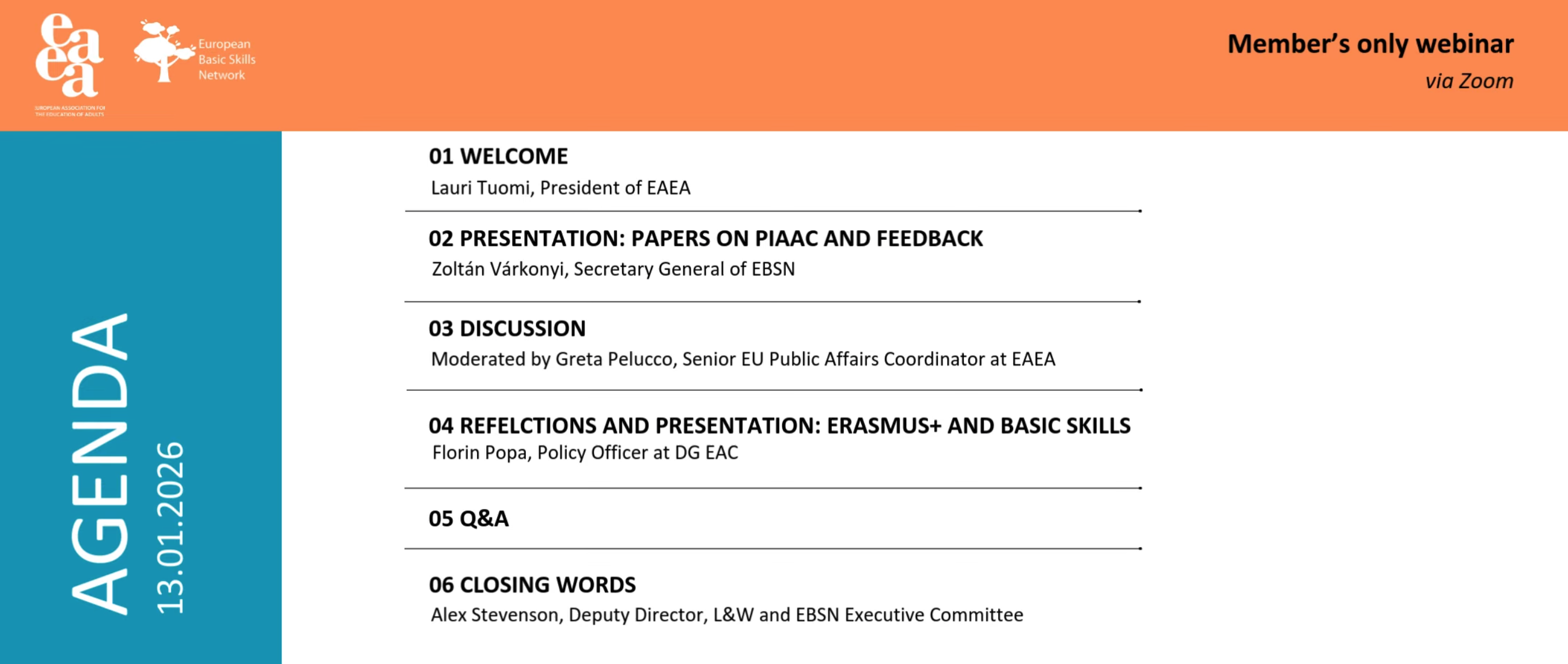
These documents tackle the “low-skills trap” through three structural pillars
- Relevance: Learning must solve everyday problems and adapt to digital and green skill needs.
- Access: Adult learning should extend beyond schools into libraries, workplaces, community hubs, and innovative learning spaces.
- Governance: Stability requires professional pathways, statutory funding, coordinated public authorities, and synergies between multiple funding streams (Erasmus+, ESF+, RPs).
Key tools and frameworks include
- Individual learning accounts and micro-credentials
- Skills guarantees for workers in reorganizations
- Support for educators adapting to new teaching environments
- Competency frameworks like DigComp for digital skills and GreenComp for sustainability
- Expansion of Jean Monnet activities into adult and vocational education
The webinar emphasized that learning happens everywhere, not just in formal institutions. Workplaces, communities, housing, and health sectors can all provide opportunities for meaningful learning. Citizen science and action research are encouraged to enhance learner-centred approaches.
Members also stressed the importance of direct input to national agencies, refining rules and indicators in Erasmus+ to ensure the most vulnerable learners are reached.
The collaboration between EBSN and EAEA members has demonstrated the power of shared insight, good practices, and collective reflection. The finalized Consultation Report and Joint Position Paper are now available. They provide a comprehensive and actionable foundation to guide policy and practice in European adult learning.
Text: Marina Sakač Hadžić