

How learning and action shape a more sustainable society
The symposium presented the action-oriented research project LEVERS, which was carried out over three years and which ends this month. The goal of the event was to stimulate common reflection and avenues for action, towards a more sustainable society.
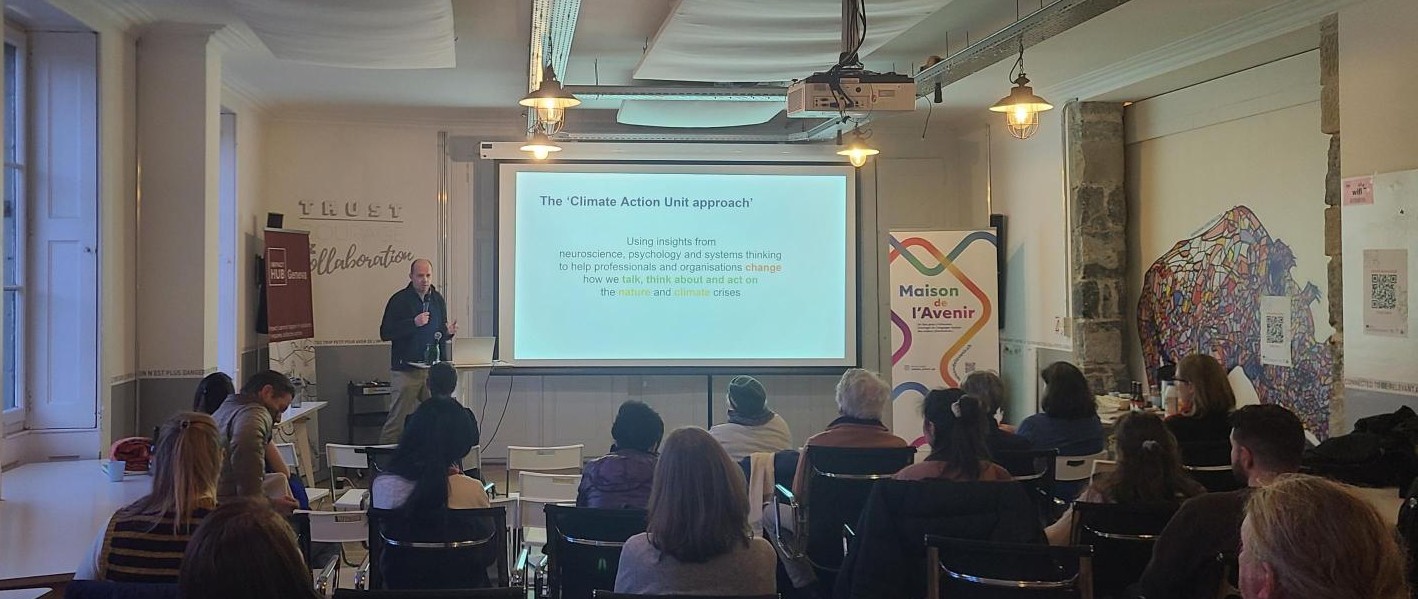
Dr Jonathan Mille/Climate Action Unit, University College of London, presented the Learning Framework of Levers, driven by 7 insights of neuroscience about action and climate change. Practical examples from examples of how action drives belief were changed, including “A nous de jouer” and the Geneva learning venture to protect water sources. The practices reflected how important it is to capitalise on existing initiatives and how joining forces with different actors, including entrepreneurial organisations, educational actors, and local authorities.
Tina Mavrič, Head of Capacity-Building at the European Association for the Education of Adults, presented the LEVERS Policy briefs on how to transform action into beliefs in the field of outreach and networking for climate education:
1. Embed sustainability learning within EU climate governance frameworks
Advocate for adult learning for sustainability to be formally embedded within EU climate governance frameworks, rather than treated as a parallel or soft policy area.
2. Strengthen the climate justice dimension in sustainability policies
Use LEVERS outcomes to advocate for stronger integration of climate justice and social equity in sustainability and climate strategies at the EU and national level.
3. Leverage transnational networks to amplify learning-based climate advocacy
Connect LEVERS Learning Ventures with European and international civil-society climate networks to scale impact and strengthen collective advocacy.
4. Reframe sustainability learning as a form of civic and policy advocacy
Promote sustainability learning not only as knowledge building, but as a pathway to civic engagement, policy literacy, and democratic participation.
5. Digital skills for a truly just and green transition
Promote a holistic approach to digital skills within the green transition, combining technical digital competences with a critical understanding of the environmental and social impacts of digital technologies.
You can read the policy briefs here: Learning for Sustainability
Action first: Finding the LEVERS of positive change
In the evening, a keynote speech was delivered by Prof. Kris De Meyer, Climate Action Unit, University College London. , Prof. De Meyer introduced insights from neuroscience and psychology that can help us to understand the controversy and polarisation that emerges around big societal problems like climate change, biodiversity loss, vaccine safety, and the like.
The insights shared during the keynote were the “Elephant and the Rider”, “Ginger the Dog”, and “Action Drives Belief”. A summary of the insights and the take-home messages can be found below.
| Insight | Take-home messages |
| Elephant and rider | 1. Intuitive thinking is roote ind lived experiences. 2. In our reactions, institutions come first, reasoning second. 3. To connect with people, speak to the Elephant! |
| Ginger the dog | 1. What we think we say is often not what other people hear 2. Ginger the Dog can only be managed, not resolved |
| Pyramid of polarisation and self-persuasion | 1. The Pyramid = moving from weak to strong opinions about an issue 2. As concern increases, opinions about what to do about climate change will continue to fragment |
| All “factual” debates are profoundly social | 1. Minds respond to stories about people/characters. 2. We easily learn from the actions of others. 3. Deep disagreements lead to stupid-crazy-evil reasoning. |
| Values | 1. Values = answers to the question what do you care about? 2. They help to understand what messages resonate. 3. People can engage in behaviour for different motivations. |
| Fear won’t do it | 1. At the individual level, fear sometimes drives action. 2. As a strategy to drive to change across society, it backfires. |
| Actions drive beliefs | 3. The only reliable form of persuasion is self-persuasion. 4. ‘Behaviour change’ morphs into ‘developing agency’. 5. Action inspires action. 6. Applying this to comms: tell stories of action, of doing. |
The inspirational keynote speech was followed by exchange and debate, driving home the message that to act for the climate, we have to take action, show others this action, and then replicate. These messages inspire EAEA’s own further work on climate justice and education, as we look to designing more capacity-building activities for our members focused on building common campaigns and advocacy actions under the annual theme ‘Resilience and Community-Building’.
You can find out more about the LEVERS project here: About – Levers for Climate.
Text: Charlotte EdePhotos: Charlotte Ede