

Mapping priorities of adult learning and education across Europe
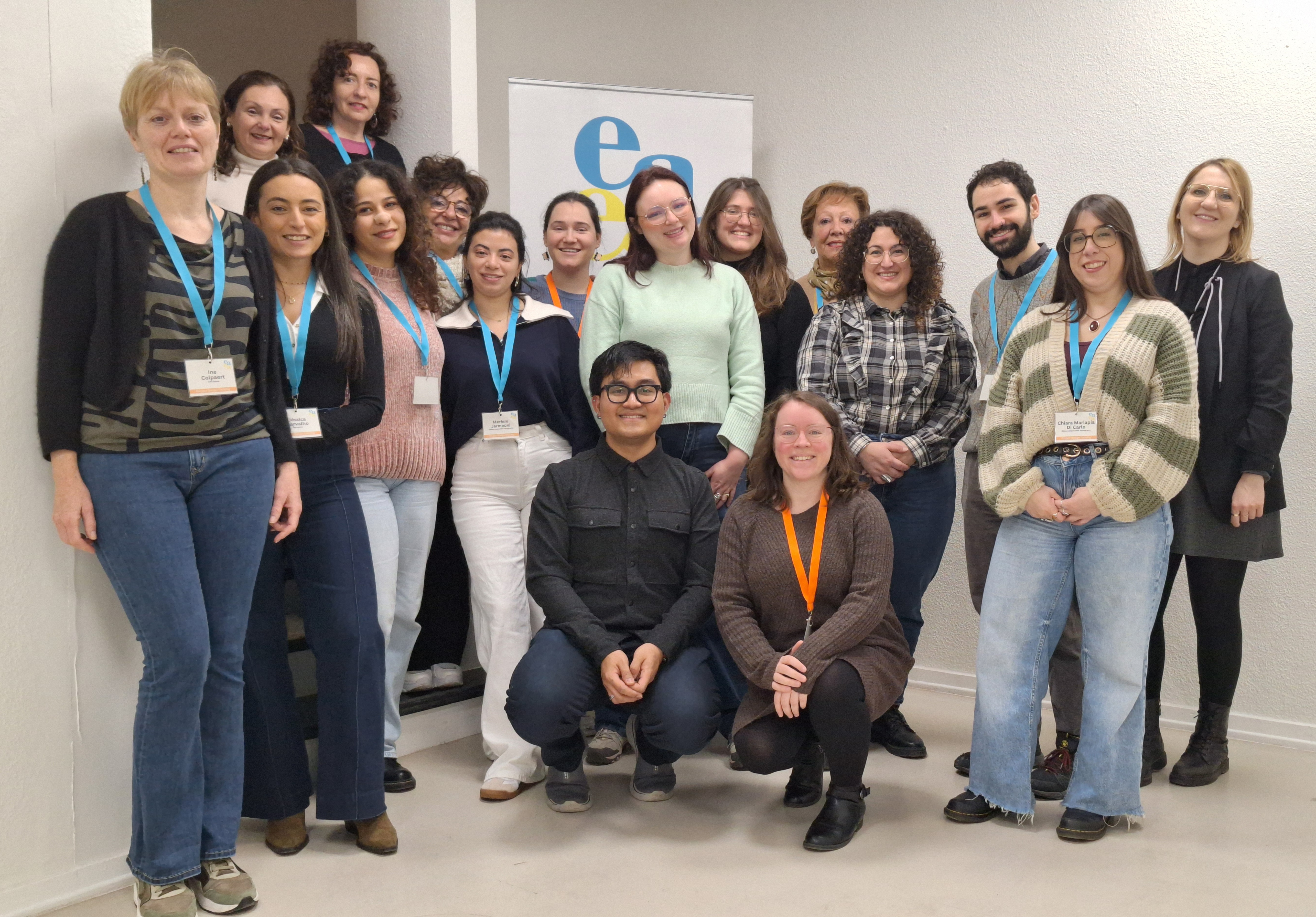
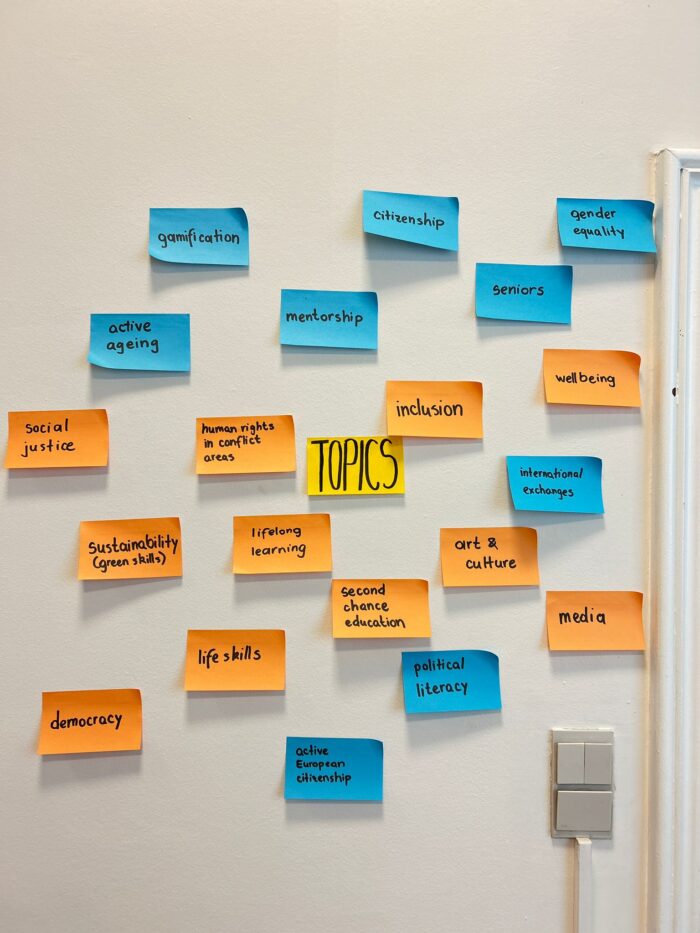
On the first day, 15 participants got to know one another and explored the different EU funding schemes available in the field of ALE. The networking sessions offered an opportunity for adult educators from Italy, Portugal, Belgium and Spain to exchange on their priorities and current topics of interest.
Recurring themes included inclusion (covering gender equality, the integration of migrants and social justice), wellbeing, democracy, political literacy and civic education, as well as sustainability. The discussions revealed that, at the heart of ALE educators’ priorities in 2026, lies a shared desire to build strong and resilient learning communities.
From topic to project narrative
On the morning of the second day, participants were guided by Charlotte Ede, Learning and Capacity-Building Coordinator, on how to effectively transform a project idea into a convincing project narrative. Participants explored existing EU priorities and learned how to align them with their project ideas.
EAEA’s annual theme on Resilience and Community-Building was also presented, alongside key policy initiatives in ALE, including the Democracy Shield, Citizenship Literacy, the Competitiveness Compass, and the Skills Portability Initiative.
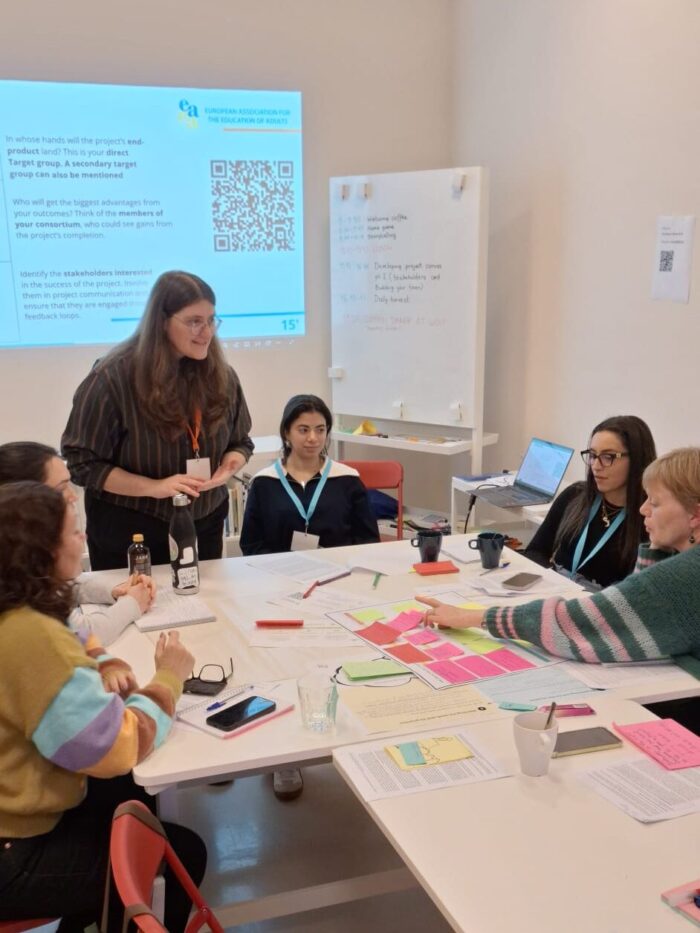
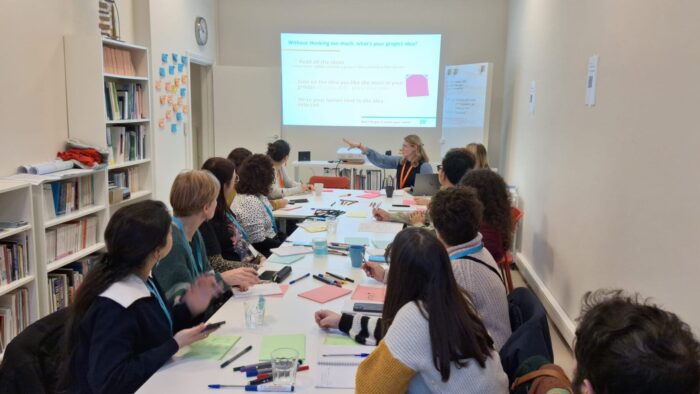
The afternoon session was led by Angeliki Giannakopoulou, Senior Policy & Projects Coordinator, who introduced the Erasmus+ funding guide for adult learning. Participants worked on building a consortium and further developed their project goals, objectives and roadmap.
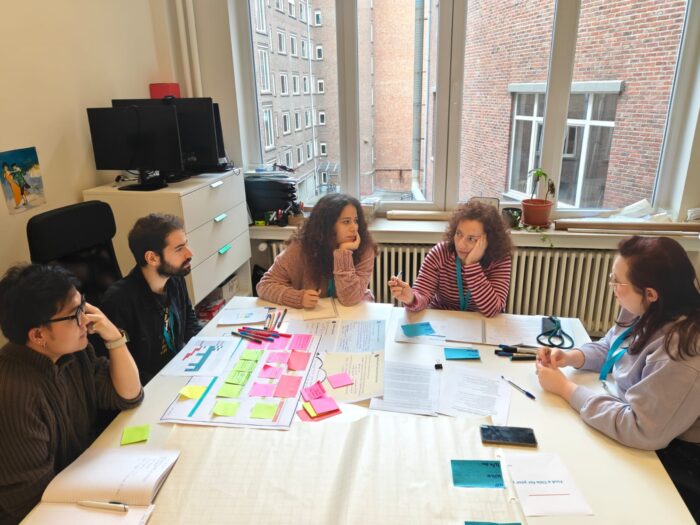
This work continued on the third day, as project narratives were translated into work plans, activities, actions and corresponding budgets, facilitated by Giannakopoulou and Tina Mavrič, Head of Capacity-Building. On the final day of the training, participants focused on evaluation criteria, impact and dissemination strategies.
Reflection: where do we go from here?
During a final group reflection session, participants shared their thoughts on the projects developed throughout the week and the professional connections established during the training.
The participants enjoyed the step-by-step approach, but would, however, appreciate a longer training to really get to know all the details of project writing.
– Tina Mavrič, Head of Capacity-Building
Well done to all participants! We look forward to continuing to work together on projects and collaborations throughout 2026.
Text: Charlotte Ede