
What is the main purpose of your program?
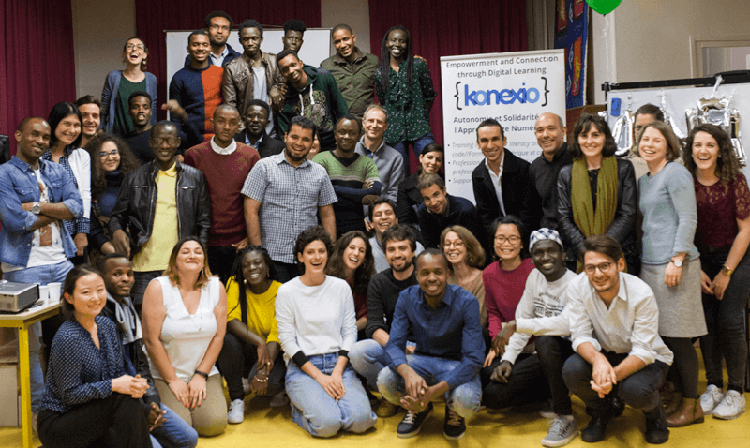
“Konexio trains refugees, migrants, and other vulnerable people in digital skills to equip them with marketable skills and prepare them for the jobs of the future,” says Jean Guo from Konexio. “In this way, we match society’s growing need for digital talent with refugees’ need for sustainable employment opportunities.
In France, Konexio’s programmes help refugees to gain employment in a job market where digital literacy is a prerequisite. Programmes are targeted to people who are resettling permanently and who lack the basic digital skills. We also accelerate high-tech careers for non-traditional candidates through our intensive full-stack web development programme and overcome hiring biases by placing students directly in their first professional engagements.
Internationally, Konexio runs educational programmes for refugees in Malawi, teaching digital skills for online freelance work. By facilitating job market integration for refugees through digital skills training, Konexio works towards social cohesion and increased opportunities for all.”
How does your program foster the outreach and access approach?
“Konexio provides a streamlined path to employment through digital skills training and the facilitation of professional work experience. We teach digital skills for which trainees earn globally-recognized certification, such as the ECDL Passport. We also place trainees in their first professional engagements so that they build their skills, experience, and networks. Soft skills components are built into the program, ensuring long-term trainee success.
In Malawi, where refugees lack the right to work, online freelancing opens a world of employment opportunities. Being able to access new and legal job markets online generates life-changing income and opportunities for people, who often have no local opportunity to work. Trainees are supported by Konexio staff in learning both digital skills and how to operate an online freelance business. We seek to multiply our impact by focusing on training people who can upskill their communities, an approach we call “Train the Trainer” . This approach helps solve the problem of refugee unemployment by using a mode of local empowerment for scale.”
What was the best practice learned from this program that you would like to share?
“The most important practice we learned was following a beneficiary-centered approach. Whether in Paris or Malawi, our programs would not have been as effective if we had not involved our students in creating solutions. For example, we have learned to consider the whole ecosystem of NGO and government services from a student’s point of view so that we can work effectively with others who share the same goal.
Not only has this helped us better serve our beneficiaries, but it also enables us to work effectively with peer organizations and come up with novel solutions. For example, we realized that government workers who were assigned to support refugees (our students included) in navigating government services were not digitally skilled themselves. So, we designed a high-impact one-day training enabling them to be more effective in teaching online administrative procedures. ”
Digital Basics & Code Program
Category: National and Transnational initiatives
Coordinator: Konexio
Country: France
Focus: Teaching digital skills to vulnerable populations
Outreach and access approach: Improving employment through digital skills training and facilitation of professional experience
Resources: Konexio website