
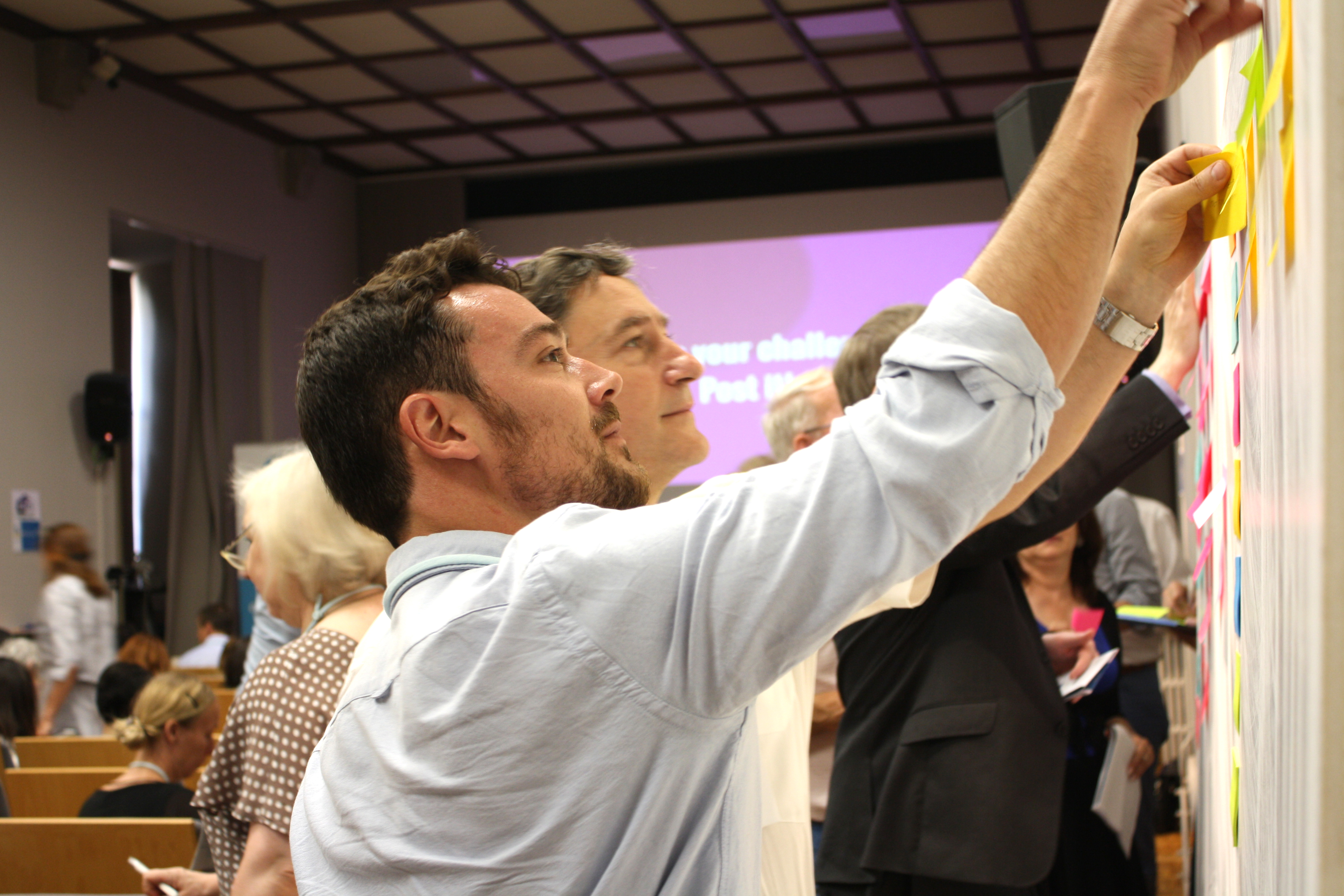
Last year's EAEA Annual Conference focused on finding ways to engage new groups of learners.
09.04.2018

Registration open: General Assembly and Annual Conference

The registration for this year’s EAEA General Assembly and Annual Conference has now been opened. This year’s events will focus on “Cooperations and Partnerships”. The events will take place in Tallinn on 27-28 June.

The General Assembly will look at the key developments in adult education and EAEA in 2017 and the way ahead. The participating members will also get a chance to discuss EAEA membership and communication services.

The festive Grundtvig Award Ceremony will celebrate excellent projects with innovative partnerships, setting the scene for the next day.

The Annual Conference will focus on the topic of cooperations from different perspectives, bringing in the voice of the digital sector and public authorities. During the workshops, the participants will discuss for example successful cooperations with the business sector and self-organised cooperations.

The events will be organised together with the EAEA’s Estonian members ANDRAS and the Estonian Adult Education Association.

More information:

10.03.2026 adult educators

What does Quality Assurance mean in non-formal ALE?

For many educators and policymakers, ‘Quality Assurance’ is linked to strong bureaucratic processes and additional workload. In our view, we look  at Quality assurance as an organisational culture and a mindset, a mindful process of continuous improvements.

09.03.2026 gender

Through the Gender Equality Task Force, EAEA reaffirms commitment to gender equality in ALE

On the occasion of International Women’s Day 2026, EAEA reaffirms its commitment to ensuring that education, training and lifelong learning contribute to gender equality and social justice.

05.03.2026 active ageing

The role of adult education in promoting active ageing and building inclusive societies

EAEA welcomes the European Commission's development of the EU Strategy on Intergenerational Fairness and emphasises the pivotal role of adult learning and education in supporting responses to the current age structure changes, fostering active ageing and intergenerational learning.